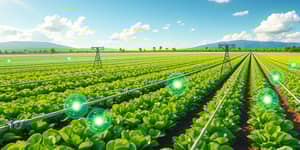
The global agricultural sector is at a pivotal crossroads. Climate crises and ethical consumerism are reshaping market demands worldwide.
Agricultural certifications have emerged as powerful tools to meet these new expectations. They provide verifiable proof of sustainable and responsible farming practices.
For leading exporters like Brazil, these certifications are no longer optional. They represent a strategic imperative for accessing premium markets and ensuring long-term competitiveness.
The adoption of certifications signals a shift towards more resilient agricultural systems. It fosters a culture of innovation and continuous improvement across the industry.
The Evolution of Agricultural Certifications
Historically, certifications began as niche initiatives focused on environmental conservation. Today, they encompass social equity and economic viability as core principles.
Organizations like Imaflora pioneered their introduction in Brazil. Starting with forest management in 1995, they expanded to agricultural sectors, adapting global standards locally.
This evolution reflects broader societal changes. Traceability has become a non-negotiable requirement in many markets, driven by consumer awareness.
Certifications now cover a wide range of practices, from biodiversity protection to fair labor conditions. They offer a comprehensive framework for holistic farm management.
Economic and Market Advantages
One of the most compelling reasons to pursue certifications is economic gain. Certified products often command premium prices in international markets.
For instance, European buyers are willing to pay more for goods that meet strict sustainability criteria. This opens lucrative opportunities for exporters in regions like Brazil.
Studies estimate that compliance with international regulations could boost Brazil's exports by up to $14.7 billion. This significant financial impact highlights the value of certifications.
Moreover, certifications facilitate access to credit and investment. Financial institutions increasingly favor sustainable projects, offering better terms to certified producers.
- Access to new and demanding markets with higher profit margins.
- Enhanced brand reputation and consumer trust leading to increased sales.
- Reduced risks associated with trade barriers and regulatory penalties.
- Opportunities for strategic partnerships with global retailers and buyers.
Over time, certifications can also lead to operational cost savings. Improved resource efficiency reduces waste and lowers expenses, boosting overall profitability.
Challenges in Certification Adoption
Despite the benefits, the journey to certification is not without obstacles. The initial costs can be prohibitive for small-scale farmers.
Audit fees, technology upgrades, and training require significant investment. Many producers struggle to afford these upfront expenses.
Probability indices vary by product, indicating different readiness levels. Coffee has a high index of 0.89, while livestock lags at 0.3, showing areas needing attention.
Compliance with diverse international standards demands robust systems. Traceability and documentation are particularly challenging in remote or resource-limited settings.
- High financial barriers for certification and ongoing maintenance costs.
- Technical complexities in implementing sustainable practices and monitoring compliance.
- Regulatory hurdles from varying standards across different export destinations.
- Need for continuous education and support to keep up with evolving requirements.
To overcome these, collaborative efforts are essential. Government and institutional support can provide the backbone for successful adoption.
Key Certifications and Their Impact
Various certifications have made significant strides in promoting sustainability. Rainforest Alliance is a global leader, with standards applied in over 60 countries.
In Brazil, it has certified pioneering farms like Fazenda Daterra for coffee. This demonstrates the scalability of regenerative practices.
Beef on Track (BoT) focuses on validating sustainable livestock production. It enhances the international visibility of Brazilian beef, facilitating trade agreements.
The Round Table on Responsible Soy (RTRS) has certified over 5.5 million tons of soy in 2024. This highlights the growing demand for responsible supply chains.
Digital tools like e-Phyto are revolutionizing export processes. Over 20,000 electronic certificates have been issued since 2025, streamlining logistics.
Support Systems and Initiatives
The Brazilian government has launched initiatives to ease certification adoption. MAPA's digital platform integrates best practices, traceability, and certification management.
Partnerships with organizations like SAI Platform and PEFC enhance credibility and alignment. Imaflora, with decades of expertise, drives innovation in certification frameworks.
These efforts reduce the burden on farmers. They provide free resources and training, fostering a supportive ecosystem for sustainable agriculture.
- Digital integration tools that simplify certification and export documentation.
- Capacity-building programs to educate producers on sustainable methods.
- Financial incentives such as subsidies to offset certification costs.
- Research investments in technologies for better compliance and monitoring.
Such support is crucial for inclusivity. It ensures that all farmers, regardless of size, can benefit from global market opportunities.
Inspiring Success Stories
Real-world examples showcase the transformative power of certifications. Fazenda Daterra in São Paulo is a landmark case, achieving the first regenerative certification for coffee.
The farm has implemented carbon compensation and organic fertilizers. These practices have reduced environmental impact while maintaining high productivity.
Another success is the widespread adoption of e-Phyto by over 447 companies. This has facilitated exports to 52 countries, demonstrating efficiency gains.
- Operational improvements leading to lower costs and higher yields through better resource management.
- Environmental benefits like reduced deforestation and enhanced biodiversity conservation.
- Social advancements including fair labor conditions and stronger community ties.
- Market achievements such as increased sales and brand loyalty from certified products.
These stories prove that sustainability and profitability are compatible. They offer a roadmap for others to follow in the certification journey.
Future Trends and Opportunities
The future of agricultural certifications is bright and dynamic. Digitalization will accelerate adoption, with technologies like blockchain enhancing traceability.
Consumer demand for transparency will continue to grow. This will drive innovation in certification standards and implementation methods.
Brazil has the potential to lead globally, thanks to its biodiversity and production scale. Leveraging these advantages can set new benchmarks for sustainable agriculture.
- Increased use of artificial intelligence and Internet of Things for real-time compliance monitoring.
- Expansion of regenerative agriculture practices to mitigate climate change effects.
- Greater collaboration between public and private sectors to harmonize international standards.
- Rising importance of certifications in global trade negotiations and economic policies.
Ultimately, agricultural certifications are paving the way for a more sustainable food system. They empower producers to thrive while safeguarding the environment for future generations.
By embracing these tools, the agricultural sector can unlock endless possibilities. The journey is challenging but rewarding, offering a path to prosperity that benefits all stakeholders.
Referências
- https://sna.agr.br/as-certificacoes-rainforest-alliance-e-beef-on-track-prometem-impulsionar-o-agro-brasileiro-no-mercado-global/
- https://portalagro.sicoobcredicitrus.com.br/brasil-progride-em-rastreabilidade-e-certificacoes-no-agro/
- https://www.gov.br/agricultura/pt-br/assuntos/noticias/certificado-fitossanitario-eletronico-ultrapassa-20-mil-emissoes-e-impulsiona-exportacoes-brasileiras
- https://exame.com/agro/opiniao-certificacoes-agricolas-abrem-caminho-para-produtos-brasileiros-no-exterior/
- https://vmxagro.com.br/certificacoes-ambientais-no-agro-vantagens-e-desafios-para-os-produtores-brasileiros/
- https://responsiblesoy.org/soja-brasileira-lidera-certificacao-rtrs-mercado-internacional?lang=pt-br
- https://bender.adv.br/certificacao-ambiental-agricultura/
- https://sebraepr.com.br/impulsiona/certificacoes-ambientais-sustentabilidade-e-competitividade-no-agronegocio/
- https://forbes.com.br/forbesagro/2025/09/agricultura-regenerativa-primeira-fazenda-no-brasil-recebe-certificacao-e-sinaliza-futuro-do-agro/