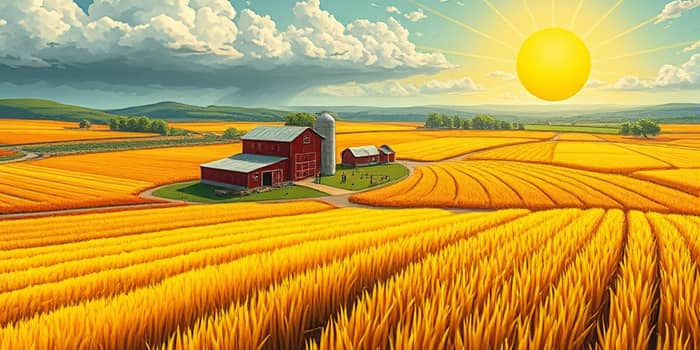
In 2025, U.S. farmers face significant financial pressure in 2025 as costs soar, prices dip, and weather threatens every harvest. Yet beneath these daunting headwinds lies an opportunity: to build true resilience through adaptability, innovation, and community collaboration. This article explores the economic landscape, core challenges, and actionable strategies to ensure farms not only survive the storm but thrive long after it passes.
Understanding the Economic Landscape
The agricultural sector shows a surprising rise in net farm income—from $140.0 billion in 2024 to $180.1 billion in 2025—driven largely by exceptional government payments driving income. However, this boost masks deeper strains. Production costs are set to climb to $507 billion, an 18% jump since 2023, while average commodity prices have dropped 16% over the same period.
Export volumes are down 6.2%, and interest rates on operating loans have climbed from 7.2% in 2023 to 8.7% in 2025. Farmland values rise modestly—from $4,100 to $4,250 per acre—offering some stability but little comfort to heavily indebted operations.
*2025 farm income projections heaviest affected by government payments.
Core Challenges Facing Farmers
Across the heartland, producers wrestle with multiple threats. From soaring input prices to unpredictable disruptions, these challenges demand decisive action and strategic planning.
- Rising Input Costs: Seeds, fertilizer, machinery, and fuel expenses outpace savings.
- Lower Commodity Prices: Declining export demand compresses profit margins further.
- High Debt Burden: Stricter lending standards and higher rates limit access to capital.
- Weather Uncertainties: unpredictable weather events—droughts, floods, and storms threaten yields.
- Pressure on New Farms: Younger and smaller operations face steeper barriers to entry.
Strategies for Financial Resilience
Resilient farms are not built on hope alone. They rely on meticulous management, diversified income, and proactive marketing plans. Below are key approaches endorsed by industry experts.
- Assess and Manage Cash Flow: Track every dollar to identify cost-saving opportunities and optimize spending.
- Maintain and Grow Working Capital: maintain and grow working capital by planning purchases and avoiding overextension.
- Diversify Income Streams: diversify income streams across sectors such as agritourism, livestock, or custom services.
- Implement Cost Controls: Keep machinery costs under 10% of gross revenue per acre by buying used or repairing equipment.
- Develop Marketing Plans: Write down robust grain and livestock marketing strategies to time sales for maximum return.
- Explore Alternative Revenue: Services like custom hauling or consulting can buffer against crop downturns.
Innovation and Adaptation
Technology and forward‐thinking practices are no longer optional. From precision agriculture to climate‐resilient crops, innovation can reduce risk and improve yields.
Invest in digital tools and sensors that monitor soil health, moisture, and weather patterns. Adopt conservation tillage or cover cropping to preserve soil structure and retain moisture. Scenario planning—modeling best, worst, and moderate outcomes—helps farms prepare for policy shifts, market swings, or unexpected yield shocks.
These measures, combined with upgrade technology and farming practices, can transform vulnerability into strength and set the stage for sustainable growth.
Community and Family Strength
Farming is deeply rooted in relationships—within families, cooperatives, and local networks. Community resilience flourishes when experiences and resources are shared.
- Shared Lessons and Support Networks: shared lessons and support networks enable risk-sharing and knowledge exchange.
- Succession and Legacy Planning: Multi-generational farms benefit from clear transition plans that balance tradition and innovation.
- Cooperative Purchasing: Bulk buying of seed, fertilizer, or fuel can reduce unit costs for small and medium producers.
Looking Ahead: Trends and Policy Factors
Several emerging forces will shape agriculture’s future. Uncertainties in trade policy, evolving food import dynamics, and potential shifts in farm support programs demand vigilance and flexibility.
Government payments in 2025 are unusually high and may not be sustained. Farmers should avoid over‐reliance on subsidies and instead focus on core profitability. Watch for changes in tariffs—particularly related to geopolitical tensions—and prepare to adjust crop portfolios or market targets accordingly.
As farmland competes with development for land use, producers who demonstrate economic and environmental stewardship will gain an edge in securing financing and community backing.
By embracing strategic adaptation, prudent financial management, and collaborative networks, the agricultural sector can weather current storms and build a foundation for robust, equitable growth in the decade ahead.
References
- https://farmonaut.com/usa/americas-farm-recession-2025-top-challenges-opportunities
- https://www.agsouthfc.com/news/blog/10-ways-farmers-can-strengthen-their-financial-resilience-relatable-finance-advice
- https://m.farms.com/ag-industry-news/us-agriculture-faces-financial-strain-in-2025-654.aspx
- https://www.farmprogress.com/farm-business/navigating-agricultural-economic-downturn-strategies-resilience
- https://www.morningagclips.com/farm-finance-forecast-will-2025-cash-and-liquidity-headwinds-hit-agriculture-hard/
- https://www.canr.msu.edu/news/farm-resilience-starts-with-a-solid-financial-foundation
- https://mbe.cpa/how-farms-can-tackle-2025s-financial-challenges/
- https://business.edf.org/insights/how-agricultural-lenders-can-boost-climate-resilience/