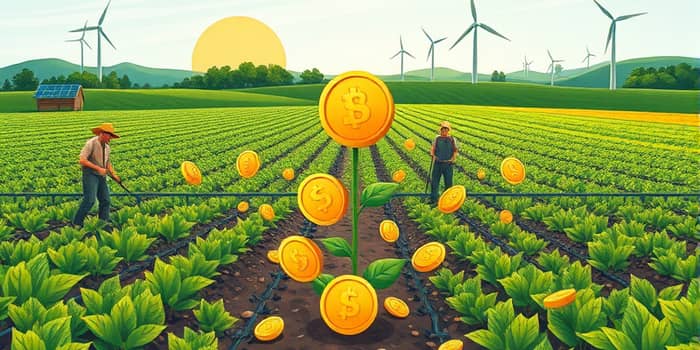
As the global population grows and climate pressures intensify, the agriculture sector stands at a crossroads. Traditional farming methods have delivered abundance, but they have also strained water supplies, degraded soils, and threatened biodiversity. In this context, sustainable finance emerges as a key catalyst, channeling capital into practices that deliver environmental, social, and economic returns for farmers, communities, and the planet.
By aligning investment with clear sustainability goals, stakeholders can generate profitable yields while nurturing ecosystems and livelihoods. This article explores the core ideas, mechanisms, challenges, and promising future of sustainable finance in agriculture.
Definitions and Core Concepts
Sustainable agriculture encompasses methods that maintain soil health, conserve water, protect biodiversity, and reduce chemical inputs. At the same time, it champions fair labor practices and robust community engagement. Sustainable finance refers to directing capital toward projects and supply chains that meet stringent environmental, social, and governance standards.
Together, these concepts form a blueprint for resilient food systems that deliver security, prosperity, and ecological balance.
The Three Pillars of Sustainable Agriculture
- Economic viability: Ensures efficient resource management for long-term farm profitability and market resilience.
- Environmental stewardship: Focuses on water conservation, carbon sequestration, soil regeneration, and biodiversity enhancement.
- Social responsibility: Prioritizes fair wages, safe working conditions, and improved community well-being.
These pillars are interconnected: healthy soils reduce input costs and boost yields, which in turn supports farmer incomes and social stability.
Mechanisms of Sustainable Finance in Agriculture
Financial institutions, development banks, and private investors have developed tailored instruments to fund sustainable practices. Key products include:
- Green loans: Offer reduced interest rates contingent on adopting conservation agriculture or drip irrigation.
- Green bonds: Raise capital for large-scale projects like watershed restoration and low-carbon agri-processing facilities.
- Sustainability-linked loans/bonds: Tie loan terms to verifiable performance metrics such as emission reductions or soil carbon increases.
- Securitization instruments: Pool smallholder loans into tradable certificates, expanding access for farmers lacking collateral.
Each instrument aligns financial incentives with measurable sustainability targets, creating a virtuous cycle of investment and impact.
Financial Products and Instruments at a Glance
Measuring Impact and Key Data
Agriculture accounts for over 25% of global greenhouse gas emissions, making it a critical sector for climate action. Innovations such as agroforestry, cover cropping, and organic composting can store up to 0.5 tons of CO₂ per acre annually. These practices also reduce input costs by improving soil fertility and water retention.
Biodiversity enhancements not only stabilize ecosystem functions but also support pollinators crucial for 75% of crop production. Studies show that smallholder farms adopting sustainable methods increase net incomes by 10–20% over five years, thanks to yield stability and market premiums.
Challenges in Implementation
Transitioning to sustainable systems entails significant upfront investments—new equipment, training, and certification fees. Smaller farmers, in particular, struggle with cash flow gaps and lack of collateral. Furthermore, complex reporting requirements for ESG compliance can overwhelm both producers and financiers.
Fragmented markets add another layer of difficulty. Diverse regional standards and inconsistent policy frameworks require coordination among multiple stakeholders—from local governments to international NGOs—to build trust and scale solutions.
Benefits and Future Outlook
- Environmental gains: Increased carbon sequestration, improved water use efficiency, and reduced agrochemical pollution.
- Social upliftment: Fair labor practices, higher wages, and strengthened food security for rural communities.
- Economic resilience: Diversified revenue streams, reduced input volatility, and access to premium markets.
Looking ahead, markets for green bonds and sustainability-linked products are projected to grow by 15–20% annually as ESG commitments become mainstream. Technological innovations—precision irrigation, satellite monitoring, and blockchain-enabled traceability—are attracting fresh capital and driving performance improvements.
Stakeholder Collaboration and Policy Framework
Effective sustainable finance requires a multi-stakeholder approach. Governments can offer subsidies, tax incentives, and technical assistance, while development agencies establish reporting standards and capacity-building programs. Private investors contribute patient capital and risk-sharing mechanisms, and farmer cooperatives aggregate demand and disseminate best practices.
Global case studies, such as Brazil’s Agribusiness Receivables Certificates and the European Union’s Common Agricultural Policy, demonstrate the power of coordinated policy and financial innovation. By sharing lessons learned and harmonizing standards, the sector can accelerate its transition toward full-system resilience and inclusivity.
In conclusion, sustainable finance is more than a funding mechanism; it represents a paradigm shift in how we value and manage natural resources, social capital, and economic growth. By watering wealth—both literal and figurative—we can sow the seeds of a more equitable, productive, and regenerative agricultural future.
References
- https://prism.sustainability-directory.com/term/sustainable-finance-agriculture/
- https://aninver.com/blog/sustainable-agriculture-definition-advantages-and-policies
- https://www.rainforest-alliance.org/insights/what-is-sustainable-agriculture/
- https://www.fondsdedotationroullier.org/en/the-endowment-fund/sustainable-agriculture-definition-principles-and-benefits/
- https://www.sweep.net/blog/what-is-sustainable-finance
- https://unglobalcompact.org/compactjournal/sustainable-finance-explained-why-it-matters-and-how-your-business-can-lead