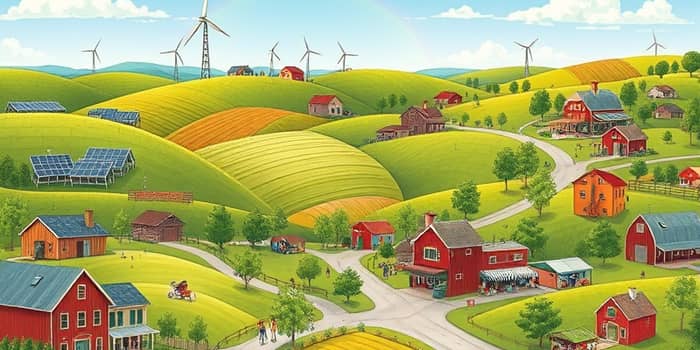
The long-term decline of small towns and farming communities, once a symbol of American grit, has begun to reverse. Across the United States—and in rural regions around the globe—a new era of revitalization and renewed growth is in motion. From innovative entrepreneurs establishing solar farms to families trading urban apartments for spacious landscapes, rural areas are experiencing a renaissance built on connectivity, policy support, and community-driven investments.
This article explores the forces driving this transformation, highlights key policy initiatives and funding mechanisms, and offers a vision for how community ventures can sustain vibrant, equitable growth in the countryside.
Understanding the Historical Context
Decades ago, many rural communities faced economic and demographic headwinds that led to stagnation. The late 20th century saw widespread closure of factories, farm consolidations, and a relentless brain drain as young people migrated to cities. Aging populations and shrinking tax bases compromised essential services, while infrastructure deficits—most notably insufficient broadband—left many regions isolated.
- Economic hardship driven by global market shifts
- The brain drain phenomenon and talent flight
- Insufficient investment in roads and schools
- Aging populations and workforce shortages
These factors combined to create a narrative of decline, but recent innovations and policy interventions have catalyzed a remarkable turnaround.
Driving Forces Behind the Revival
The Rural Renaissance rests on several key forces reshaping rural life. First, the rise of remote and hybrid work has untethered professionals from urban offices, enabling them to choose small-town living without sacrificing career growth. Technological advances have followed suit, as high-speed internet removes previous barriers and connects farms to global markets.
- Growth of remote and hybrid work opportunities
- Improved broadband reaching remote communities
- A renewed desire for affordability and community
These elements combine to attract both new residents and returning families, fueling economic demand and cultural vibrancy.
Policy and Legislative Initiatives Powering Growth
Governments at the state and federal levels have recognized the potential of rural revitalization and have channeled significant resources into infrastructure, housing, and business support. A flagship example is Florida’s Rural Renaissance Package (2025), which commits $50–51 million per year to fiscally constrained counties.
Florida’s approach illustrates how targeted funding, when paired with strategic planning, can deliver tangible results. Counties that receive support are deploying grants to repair critical bridges, expand telehealth networks, and rehabilitate historic downtown districts. Meanwhile, federal programs such as the USDA’s ReConnect Pilot and the Department of Transportation’s BUILD grants complement state efforts by offering competitive awards for broadband expansion and road improvements.
Nationally, the $2.6 million grant led by Ascendium Education Group and ECMC Foundation supports ten regional partnerships that include Indiana’s John Jay WorkReady Institute, Ohio’s Columbus Learning Center, and similar initiatives in Montana, Georgia, and Pennsylvania. These programs link community colleges with local industries, creating apprenticeships and certificate pathways that respond directly to employer needs.
Strategic Investments in Community Ventures
Targeted investments are the lifeblood of any renaissance. Stakeholders have converged around four priority areas to build sustainable local economies.
- Small business support, promoting local entrepreneurship and creative businesses
- Workforce development and education-to-employment pathways
- Healthcare access, via mobile units and provider incentives
- Infrastructure enhancements, including roads and broadband
- Housing development with affordable, quality rural housing
Funding structures vary from block grants and competitive awards to public-private collaborations, ensuring that resources align with community needs and strategic goals.
For entrepreneurs, microloan programs and technical assistance centers provide the capital and expertise needed to launch ventures from agritourism to artisanal manufacturing. Education-to-employment strategies are underpinned by mentorship networks and digital platforms that track skill certifications and job outcomes, ensuring that training translates into employment opportunities.
Impact, Opportunities, and Remaining Challenges
Early results of this coordinated approach are promising. Regions with robust program engagement are witnessing more dynamic, diversified economies and a preservation of rural cultural heritage. New residents bring fresh energy, while existing populations benefit from improved services and job prospects.
Statistical trends reinforce anecdotal success: the U.S. rural population of over 46 million saw modest net migration gains in more than 20% of counties between 2020 and 2024. Counties engaged in coordinated funding programs report up to a 15% increase in new business registrations, while broadband subscription rates have climbed by 25% in grant-supported regions.
However, hurdles remain. Persistent funding gaps, slow broadband rollouts in the most remote areas, and legislative fragmentation can stall progress. Bridging these divides requires continuous collaboration between local leaders, state agencies, and private investors to ensure narrowing the rural-urban divide in access to healthcare, education, and capital.
Cultural Shifts and the Vision Forward
Beyond statistics and policy, the Rural Renaissance is driven by a powerful cultural narrative shift. A new generation values space and autonomy, seeing small towns not as retreats but as hubs of innovation and community-driven economic growth. Families are relocating, attracted by lower living costs and stronger social bonds.
Heritage tourism is emerging as a key driver of local economies, with festivals celebrating indigenous crafts, historic farm tours, and farm-to-table culinary trails drawing visitors year-round. Communities are also exploring renewable energy cooperatives—solar and wind initiatives that not only reduce carbon footprints but generate revenue streams shared by local stakeholders.
Looking ahead, the sustainability of this movement depends on integrating climate resilience into agricultural practices, enhancing social equity across demographic groups, and nurturing local leadership. By fostering collaboration and leveraging technology, rural America can write a new chapter of prosperity—one where community ventures serve as catalysts for lasting change.
As we travel winding backroads and explore bustling farmers markets, it’s clear that the Rural Renaissance is more than a policy agenda—it is a heartfelt commitment to the places and people who have long formed the backbone of national identity. Investing in community ventures will not only uplift individual towns but will strengthen the entire social and economic fabric of our country. The seeds we plant today—through funding, innovation, and collaboration—will harvest a future where rural and urban America thrive in harmony.
References
- https://vocal.media/01/rural-renaissance-how-small-towns-are-becoming-innovation-hubs-in-2025
- https://prism.sustainability-directory.com/term/rural-renaissance/
- https://www.ruralworkspartners.com/whitepaper-a-blueprint-for-a-rural-renaissance/
- https://floridaspecifier.com/mar-apr-2025/florida-senate-president-lays-out-his-rural-renaissance/
- https://www.ascendiumphilanthropy.org/shared-knowledge/news-and-insights/rural-renaissance-new-initiative-aims-to-revitalize-communities
- https://www.wusf.org/politics-issues/2025-04-22/florida-house-breaks-up-rural-renaissance-plan
- https://empirecommunities.com/blog/rural-renaissance-how-a-new-generation-is-embracing-small-town-living/