As the global agricultural landscape evolves, grain markets stand at the forefront of opportunity and uncertainty. This article explores strategies to capture value, optimize operations, and navigate the complex web of economic, environmental, and technological forces shaping profitability in mid-2025.
Modern Mechanisms of Profit in Grain Markets
Grain producers today leverage a variety of financial tools to lock in earnings and mitigate price swings. Futures contracts and options allow farms to set sale prices months in advance, while hedging strategies protect against unexpected market dips. By closely monitoring forward curves and basis differentials, growers can choose the most advantageous timing for selling corn, soybeans, or wheat.
Successful operations integrate input and output cost analysis to identify margins. Software platforms now automate profit simulations, comparing scenarios across price points, planting dates, and yield forecasts. This dynamic approach helps operators allocate acreage and manage cash flow with unprecedented precision.
Economic Drivers Shaping Farm Income
In 2025, U.S. net farm income is projected to rise 28.5% reaching $180.1 billion, marking the third-highest level on record. Strong commodity prices, coupled with reduced input costs, have fueled this surge, even as export volumes decline.
Despite rising incomes, the sector faces its largest-ever trade deficit of $45.5 billion. Agricultural exports are set to dip 3.3% to $170 billion, while imports climb to $215.5 billion. Meanwhile, record US farm sector equity at $3.8 trillion provides a robust financial foundation for investment and expansion.
Key Expense Trends Table
These shifting costs present both challenges and advantages. Lower fertilizer and pesticide expenses free capital for technology investments, while seed cost rebounds highlight the premium placed on genetic gains and hybrid vigor.
Harnessing Technology for Yield and Profitability
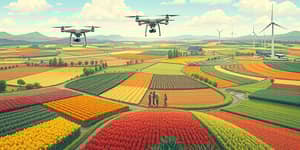
The digital agriculture market is growing at 9.17% YoY through 2030, driven by AI, precision systems, and remote sensing. Farmers deploy drones and satellites to generate real-time crop health maps, applying inputs only where needed. This resource efficiency through targeted application reduces waste and maximizes yield potential.
Regenerative practices, biotech innovations, and soil microbiome enhancements are unlocking new profit pathways. By sequestering carbon and improving soil health, producers can access premium markets or voluntary carbon programs—adding an additional revenue stream beyond traditional grain sales.
Climate and Environmental Impacts on Volatility
Weather extremes and climatic variability continue to challenge supply stability. Droughts in North America and floods in Australia have tightened wheat and barley supplies, causing price spikes in global markets. As growers face unpredictable seasons, supply and demand balance complicated by environmental shifts becomes the norm.
Adaptive strategies such as cover cropping, irrigation scheduling, and diversified rotations help farms manage risk. Insurance products that incorporate weather derivatives and index-based payouts are gaining popularity, providing payoffs when rainfall or temperature thresholds are breached.
Global Demand Shifts and Emerging Markets
Population growth in Asia and Africa, coupled with rising incomes, is fueling demand for grains—particularly as feedstocks for livestock. Soybean exports alone are expected to surge by 12% in 2025, driven by feed needs in China, India, and Brazil. This trend creates lucrative export opportunities for U.S. producers willing to navigate logistical challenges.
Meanwhile, biofuel mandates continue to link agricultural markets to energy prices. Corn and sugarcane remain the primary inputs for ethanol, while oilseed crops support biodiesel production. Fluctuating crude oil markets thus ripple into grain valuations, underscoring the interconnected nature of global commodities.
Policy Pressures and Trade Dynamics
Regulatory changes around biofuel quotas and trade agreements can upend market expectations overnight. Growers must stay informed about domestic EPA rulings and international tariff negotiations, as new measures can alter demand flows rapidly. Collaborative industry networks and government advisory panels are vital resources for anticipating policy shifts.
Supply chain disruptions—from labor shortages to export bans—heighten the need for strategic planning. Maintaining buffer stocks, diversifying buyer portfolios, and investing in on-farm storage infrastructure help mitigate the impact of sudden export restrictions or port backlogs.
Risk Management Strategies for Growers
- Implement crop insurance with weather-index options
- Adopt precision ag tools for input optimization
- Diversify across grains, oilseeds, and livestock enterprises
By combining financial and operational hedges, producers can smooth income streams and protect long-term sustainability. Engaging with cooperative marketing groups and forward contracting also strengthens bargaining positions in volatile markets.
Opportunities and Future Outlook
- Expand into Asian and African feedstock markets
- Invest in regenerative and premium crop segments
- Leverage data analytics for proactive decision-making
The convergence of automation and sustainable farming practices promises robust growth of 10.55% annually in regenerative agriculture. Early adopters stand to capture significant market share and command price premiums for eco-certified grains.
As the 2025 season unfolds, proactive producers who embrace innovation, diversify risk, and engage global buyers will unlock the next wave of profitability. The grain markets await those ready to adapt and thrive.
Conclusion: In an era of rapid change, success in grain markets hinges on agility, informed risk-taking, and a commitment to sustainable practices. By integrating advanced technologies, managing costs, and seizing emerging export opportunities, farmers can secure lasting profits and drive the future of agriculture forward.
References
- https://www.icl-group.com/blog/4-key-agrotech-trends-2025/
- https://agiscapital.com/state-of-the-market-report-2025/
- https://www.agribusinessglobal.com/markets/10-key-trends-to-watch-in-global-agribusiness-in-2025/
- http://www.ers.usda.gov/topics/farm-economy/farm-sector-income-finances/farm-sector-income-forecast
- https://eos.com/blog/agritech-market-overview-and-trends-for-2025-2030/
- https://fapri.missouri.edu/publications/2025-us-agricultural-market-outlook/
- https://farmonaut.com/blogs/agriculture-commodity-prices-2025-market-trends
- http://www.ers.usda.gov/publications/pub-details?pubid=37818