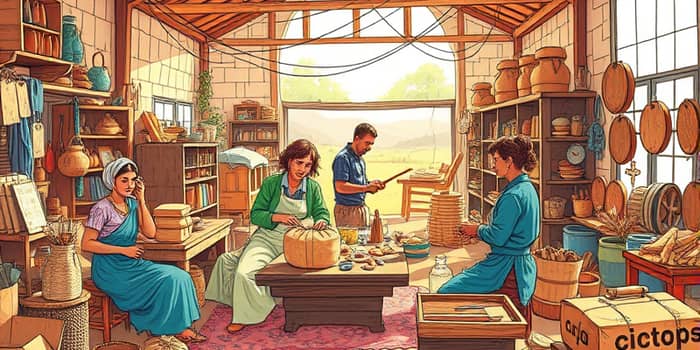
Amid rolling hills and quiet villages, rural artisans are weaving both tradition and innovation into their work. These creative entrepreneurs preserve age-old techniques while forging new paths in today’s market. Yet to flourish, they need more than talent—they need access to capital, digital tools, and supportive networks.
Economic and Cultural Significance
Artisans serve as cultural ambassadors, preserving cultural traditions and heritage embedded in every handcrafted piece. By sustaining local crafts, they bolster small economies and honor generational knowledge passed down through families.
The North American handicrafts market reflects this rich tapestry, with consumers drawn to authenticity and sustainability. Across the Atlantic, the UK records 11,220 craft businesses generating $6.3 billion in exports, underscoring the global appetite for handmade goods. During the Covid-19 pandemic, a renewed consumer focus on sustainability spurred interest in local artisans, shifting supply chains and consumer values.
Globally, artisan employment ranks second only to agriculture, engaging millions and supporting rural livelihoods. Their creations foster social cohesion and community identity, making each sale a testament to shared heritage and economic resilience.
Overcoming Funding Barriers
Despite their value, rural artisan enterprises face significant obstacles. Banks often impose strict lending requirements and high costs that exclude small-scale creators. Lengthy approval processes and collateral demands leave many artisans without the capital to invest in growth.
- Complex loan applications with high documentation needs
- Elevated interest rates and prohibitive fees
- Inadequate digital infrastructure in remote communities
- Unpredictable income streams tied to seasonal demand
Social and logistical isolation can compound these challenges, making it difficult for makers to build credit histories or attend training workshops. These dynamics perpetuate a cycle where creative talents remain underfunded and underexposed.
Furthermore, approximately 98% of artisan ventures operate informally, lacking legal protections or access to social safety nets. This fragility undermines long-term planning and leaves artisans vulnerable to market shocks.
Innovative Funding Models Transforming Access
Emerging solutions are rewriting the funding playbook for creative rural businesses. Fast, flexible capital through FinTech solutions is at the forefront, with embedded lending in the US projected to grow from $6.35 billion in 2025 to $23.31 billion by 2031 at a 20.4% CAGR. These platforms leverage APIs to streamline credit decisions and deliver funds rapidly.
- Embedded lending platforms offering on-demand credit
- Nonprofit grants and coaching programs for underrepresented artisans
- Targeted government initiatives to build rural digital ecosystems
Nonprofit organizations like Nest provide grants of $5,000 alongside professional coaching, empowering recipients to attend trade shows and develop strategic marketing plans. Federal and USDA programs invest in broadband and technical support, aiming to bridge the digital divide and foster resilient rural economies.
Crowdlending and peer-to-peer microloan networks are also gaining traction, allowing community members and enthusiasts to fund specific projects directly, building relationships and shared stakes in artisan success.
Digital Adaptation and Market Expansion
Digital transformation has been a game changer for artisan businesses. With direct access to global marketplaces, makers can showcase their work beyond local farmers markets and craft fairs. E-commerce platforms, crowdfunding campaigns, and virtual events enable rural artisans to connect with audiences worldwide.
Platforms like Etsy and Shopify have onboarded thousands of rural creators, providing storefront templates and payment processing. Virtual pop-up markets and online craft fairs replicate in-person experiences, driving traffic and boosting sales during peak seasons.
Despite these strides, many rural areas still lack reliable high-speed internet. Public-private partnerships are crucial to expand broadband access, ensuring all artisans can benefit from online sales initiatives and digital marketing strategies.
Inspiring Success Stories
Cynthia Main, a craftswoman from Kentucky, illustrates the power of targeted funding. With a $5,000 Nest grant, she invested in a wholesale trade show, expanding her broom and dustpan business beyond her rural hometown. There, she doubled her profits from $120,000 to $240,000, forging new client relationships in urban centers.
Across the globe, the Ethik Collective partners with artisans in South Asia to secure fair trade agreements. By connecting 2,784 makers with stable orders, the collective has delivered financial stability for over 11,150 dependents, transforming livelihoods and strengthening entire communities.
Recommendations for Future Growth
To sustain and scale rural artisan enterprises, stakeholders must collaborate and innovate. Efforts should focus on expanding access to capital, enhancing digital infrastructure, and offering tailored business support. By doing so, we can unlock the full potential of creative rural businesses, driving economic and cultural vitality.
- Forge public-private partnerships to fund broadband development
- Scale alternative lending models specific to artisan needs
- Provide affordable e-commerce training and technical tools
- Expand grant programs targeting underrepresented creators
Additionally, policy incentives such as creative industry tax credits and microloan guarantee programs can further lower barriers, making financial support more attainable for rural artisans.
Conclusion
Rural artisans stand at the intersection of tradition and innovation, weaving stories into every handmade piece. By addressing funding hurdles, embracing digital tools, and fostering strategic partnerships, we can ensure these creative businesses thrive. Together, we can champion a vibrant future where culture, craftsmanship, and community prosperity go hand in hand.
References
- https://finance-commerce.com/2025/06/nest-women-artisan-business-support/
- https://www.canopyservicing.com/blog/small-business-lending-statistics/
- https://ballardbrief.byu.edu/issue-briefs/income-instability-among-artisans-in-south-asia
- https://markwideresearch.com/north-america-handicrafts-market/
- https://customcy.com/blog/craft-handmade-stats/
- https://seekingalpha.com/article/4794045-artisan-value-fund-q1-2025-commentary