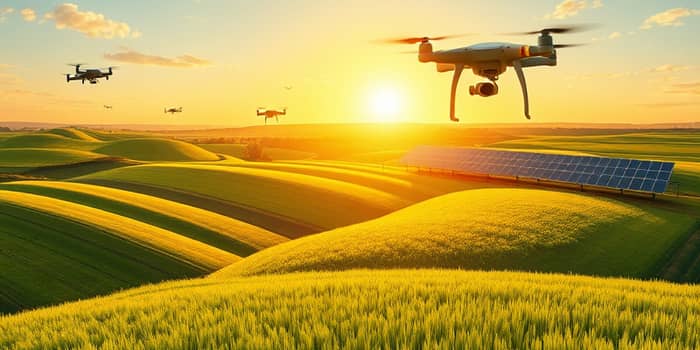
Global demand for food, fiber, and bioenergy continues to soar, making agribusiness one of the most compelling investment arenas in 2025. With a blend of tangible real assets with lasting value and innovative technologies reshaping the sector, investors find agriculture uniquely positioned for stability and growth.
From family-owned farms to major corporate operations, the agricultural value chain is undergoing a transformation fueled by sustainability, digital tools, and evolving markets. This article explores the key drivers, performance forecasts, and opportunities that put agribusiness at the forefront of modern portfolios.
Market Size and Growth
Worldwide agribusiness investments are projected to surpass $1.5 trillion in 2025, reflecting a surge in capital flowing into farmland, equipment, and related infrastructure. In the United States alone, agricultural investment funds are on track for 8% annual growth, expected to reach $20 billion in assets this year.
This remarkable expansion is supported by population growth, rising incomes in emerging markets, and a strategic focus on sustainability. As consumers demand traceable, responsibly produced goods, investment into agriculture is not only profitable but also purpose-driven.
- Global agribusiness market: $1.5 trillion projected
- U.S. fund assets: $20 billion with 8% annual growth
- Emerging markets driving demand for quality products
Sector Profitability and Financial Forecast
U.S. net cash farm income is forecast to reach $193.7 billion in 2025, an increase of $30.6 billion, or 18.8%, from the previous year. Net farm income is set to rise by 26.4%, fueled by a significant upswing in government payments from $9.6 billion in 2024 to $42.4 billion in 2025.
Major publicly traded farmland REITs and ag investment funds project returns of 6.5% and 9.2% ROI in 2025, bolstered by consistent 3-year compound annual growth rates of 6–8%. These figures underscore agribusiness’s appeal as a resilient asset class even during market volatility.
Economic Drivers
Key economic forces propelling agriculture include rising global food demand, trade expansion, and demographic shifts. As urban populations grow, so does consumption of grains, proteins, and fresh produce, with the U.S. maintaining a strong export footprint, especially in soybeans, corn, and dairy markets.
Investment Opportunities
Investors can tap into a range of agribusiness segments that offer diversified risk profiles and return potentials. Farmland remains a cornerstone asset class, delivering stability, inflation protection, and long-term appreciation, while technology and sustainability initiatives unlock higher margins and new revenue streams.
- Farmland: steady returns and inflation hedging qualities
- AgTech: precision agriculture and smart irrigation boosting yields and cutting costs
- Regenerative agriculture: regenerative and climate-smart practices improving soil health and resilience
- ESG investments: environmental, social, and governance standards driving capital towards green bonds and carbon credits
Agricultural Production and Demand Trends
Major crops exhibit diverse demand patterns. Corn continues to serve ethanol and animal feed markets, soybeans benefit from strong export pipelines, and wheat sees steady international demand. Fruits and vegetables enjoy a premium as consumer health trends drive organic and local food preferences.
Livestock and dairy operations are expanding to meet global protein needs, although price volatility remains a challenge. Input costs are shifting: fertilizer expenses are forecast to decline by 11.1%, pesticide costs by 6%, while seed expenditures may rise by 4.2%. Livestock and poultry purchases are projected at $50.5 billion for 2025.
Policy, Risks, and Challenges
Government support through disaster assistance and economic relief plays a critical role in stabilizing farm incomes. However, trade policy volatility poses risks, especially if tariffs disrupt export markets for pork, grains, and oilseeds.
Climate-related risks such as droughts, floods, and extreme weather events necessitate investment in resilient crop varieties and regionally diversified portfolios. Integrating climate-smart approaches and insurance strategies is now standard practice for risk management.
Strategic Approaches for Investors
Successful agribusiness investors adopt multi-pronged strategies that blend traditional and innovative assets. Diversification across row crops, specialty produce, and ag infrastructure reduces exposure to single-commodity cycles, while vertical integration—controlling operations from production to processing—enhances margins and quality control.
Tapping into government incentives, sustainability grants, and emerging carbon markets allows investors to align profitability with environmental impact, accessing a growing pool of capital for low-carbon agriculture projects.
Notable Investment Vehicles and Returns
Institutional and private investors have a variety of funds and REITs to choose from, each with distinct focuses and strategies. Below is an overview of leading vehicles and their projected returns for 2025.
Structural Advantages of Agriculture
Agriculture offers an enduring value proposition as a real asset class. Farmland historically correlates with inflation, providing a hedge against currency devaluation, while low correlation with equities and bonds enhances portfolio resilience. In downturns, tangible agricultural assets often retain or gain value.
Future Outlook and Emerging Trends
Looking ahead, growth in agribusiness is expected to continue, underpinned by technological advancements, policy support, and sustained global demand. Challenges such as climate change and input price fluctuations remain, but innovations in crop genetics, smart machinery, and risk management are mitigating many threats.
Investors are increasingly prioritizing regions with stable climates and water resources, and blending traditional farmland holdings with digital platforms that track supply chains and measure impact metrics.
Digital Transformation and Sustainability
Digital tools—from remote sensing drones to blockchain-enabled traceability—are redefining farm management and market access. These platforms help optimize inputs, reduce waste, and improve transparency, creating value for producers, buyers, and investors alike.
Meanwhile, the rise of carbon markets and bioeconomy initiatives opens new revenue channels. By converting agricultural waste into energy, bioplastics, or soil amendments, producers and investors unlock additional income streams while advancing environmental goals.
Conclusion
As the world grapples with feeding a growing population amid environmental constraints, agribusiness stands out as a dynamic investment frontier. By combining projected to surpass $1.5 trillion global markets, robust financial forecasts, and transformative technologies, agriculture offers an unparalleled blend of stability, growth, and purpose.
Whether through farmland ownership, ag-focused funds, or innovative bioenergy projects, investors have multiple pathways to participate in this sector. The time to cultivate opportunity in agribusiness has never been more ripe.
References
- http://www.ers.usda.gov/data-products/charts-of-note/chart-detail?chartId=110894
- https://lendingacres.com/2025/02/10/usda-agricultural-projections-to-2025-key-insights-and-future-outlook/
- https://farmonaut.com/blogs/top-5-diversified-agriculture-investment-opportunities-2025
- https://agpolicyreview.card.iastate.edu/winter-2025/usdas-outlook-2025
- https://farmonaut.com/usa/us-agriculture-investment-funds-top-2025-growth
- http://www.ers.usda.gov/topics/farm-economy/farm-sector-income-finances/farm-sector-income-forecast
- https://www.capstonepartners.com/insights/article-agtech-market-update/
- https://www.statista.com/outlook/io/agriculture/worldwide