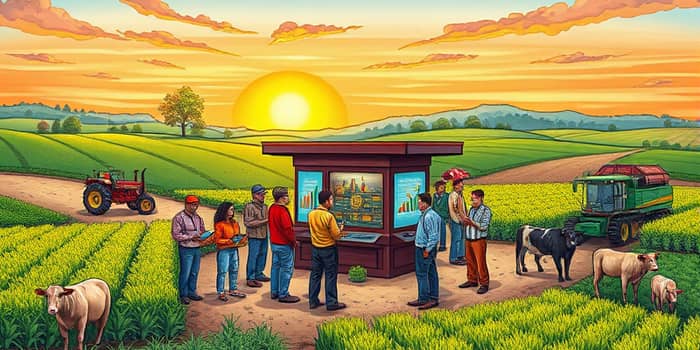
In the evolving landscape of rural development, access to finance emerges as a cornerstone for sustainable growth. Agri-finance extends beyond simple credit lines or insurance policies; it represents a vital ecosystem that underpins every stage of agricultural production. From seed procurement to market access, empowers rural entrepreneurs with crucial finance can transform local economies, spur innovation and foster resilience. This article explores how tailored financial services catalyze prosperity in rural areas, highlighting real-world examples, challenges, and the promise of digital transformation.
Understanding Agri-Finance and Its Scope
At its core, agri-finance is a specialized subset of rural finance dedicated exclusively to agricultural activities. It encompasses traditional offerings like loans, savings accounts and insurance, while also supporting agribusiness ventures and value chain development. Farmers, fisheries and related rural enterprises rely on these services to mitigate risks and invest in technologies.
The primary types of agri-finance services include:
- Savings: Secure storing of surplus funds
- Credit: Investment, consumption and emergency loans
- Insurance: Crop, livestock and health cover
The Vital Role of Agri-Finance in Rural Growth
Agri-finance is not merely financial transactions; it is a catalyst for holistic development. By ensuring that farmers have timely and adequate funds, it supports the adoption of innovations like drip irrigation, mechanization and precision agriculture. These advancements contribute to higher yields, increases productivity and income generation for families across remote communities.
Moreover, rural enterprises often operate under tight cash flow constraints due to seasonality. Tailored credit products bridge the gap between pre-harvest expenses and post-harvest revenues, allowing entrepreneurs to invest in inputs and cover operational costs without disrupting household budgets.
Data-Driven Impact and Metrics
Concrete data illustrates the transformative power of agri-financing initiatives. Consider the Nepal Rural Enterprise Financing Project:
- 21,604 rural farmers engaged in enterprise activities, with 49% women participation.
- Direct employment generated for 1,239 individuals, maintaining gender balance.
- 12 collective enterprises with 30,884 small farmer shareholders (81% women).
In Mozambique, the Rural Enterprise Finance Project aims to reach 287,700 rural people with US$72.54 million in combined finance and support. These figures are matched by encouraging overall financing trends: rural small businesses exhibit a 39% application rate and 59% approval rate for traditional financing in 2024, outpacing urban counterparts (36% application, 50% approval).
Championing Women in Rural Enterprises
Women's leadership in rural enterprises is a core success factor. In the Nepal project, 63% of individually financed enterprises are women-led, and 82% of collective enterprise shareholders are women. By combining financial products with business plan development, skill training and policy support, these programs empower female entrepreneurs to navigate barriers and build resilient ventures.
Creating an inclusive financial ecosystem also demands targeted outreach, mentorship programs and group lending models that leverage communal trust. Such approaches bolster confidence and ensure that rural women gain equitable access to capital and markets.
Overcoming Challenges in Agri-Finance
Despite clear benefits, rural finance faces persistent obstacles. Limited banking infrastructure, high transaction costs and information gaps hinder service delivery. Financial institutions often perceive higher risks due to weather uncertainties, price volatility and dispersed borrower locations. Moreover, underserved populations such as smallholders, women and youth encounter additional barriers to formal financing channels.
The main challenges include:
- Limited banking infrastructure in remote areas
- High transaction costs due to dispersed populations
- Information asymmetry and credit risk assessment
- Access barriers for underserved groups
Innovation and Digital Transformation
Technology is redefining agri-finance by offering more inclusive and efficient solutions. Mobile banking, digital credit scoring and e-wallets reduce dependence on physical branches, while remote advisory platforms deliver timely information on best practices. Financial literacy training and user-friendly interfaces help rural entrepreneurs adopt these tools and manage their finances effectively.
Digital solutions also enable crop insurance and risk management by automating claims processing and monitoring weather data in real time. This not only improves trust in insurance products but also fosters quicker disbursements, essential during climate-related shocks.
Policy Recommendations and Future Directions
To sustain and scale agri-finance impact, stakeholders must collaborate across public, private and development sectors. Key policy actions include:
- Gender-inclusive financing guidelines
- Capacity building for rural finance institutions
- Public-private-development partnerships
- Dedicated rural finance units
Governments and regulators can support credit guarantee schemes, incentivize branch expansion and enable interoperable digital platforms. Development agencies and impact investors can align funding with capacity building, ensuring that technological innovations reach the most remote communities.
Ultimately, a coordinated approach that addresses infrastructure gaps, enhances risk-sharing mechanisms and leverages data analytics will define the next frontier of agri-finance. By nurturing an ecosystem of trust, innovation and inclusivity, rural entrepreneurs can unlock unprecedented growth, driving food security, employment and sustainable development.
As the world grapples with challenges like climate change, population growth and volatile markets, agri-finance emerges as a lifeline for communities that feed the globe. Investing in smart money solutions for rural enterprises is not just an economic imperative but a moral one, ensuring that those who cultivate our future are empowered to thrive.
References
- https://www.richmondfed.org/region_communities/regional_data_analysis/regional_matters/2025/how_different_rural_urban_small_businesses
- https://www.numberanalytics.com/blog/rural-finance-essentials-agribusiness
- https://www.adb.org/projects/53144-001/main
- https://blog.bosswallah.com/agri-financing/
- https://www.ifad.org/en/w/projects/2000001175
- https://en.wikipedia.org/wiki/Agricultural_finance