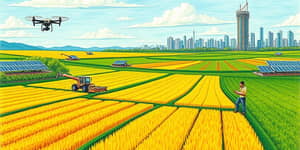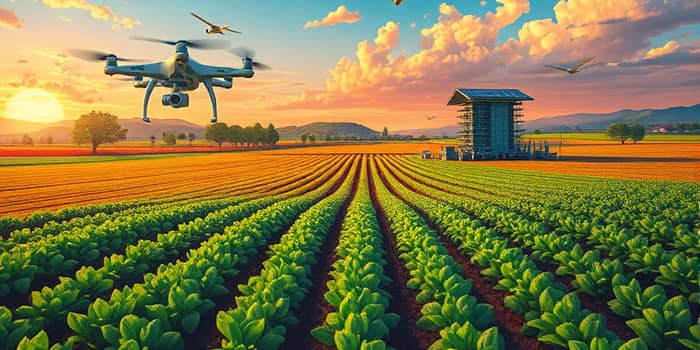
The agricultural sector stands at a crossroads: facing mounting food demands while grappling with climate volatility. The fusion of cutting-edge technologies and strategic funding is reshaping how farmers grow, harvest, and deliver our daily bread. By examining the trends, successes, and challenges of 2025, we can chart a transformative course toward a resilient and sustainable food future.
Emerging Technologies Revolutionizing Agriculture
Modern farms are no longer defined solely by tractors and plows. Today’s innovators harness AI-powered predictive analytics and weather forecasting to guide planting schedules and optimize resource allocation. Machine learning algorithms scan satellite imagery to detect early signs of pest infestations or nutrient deficiencies, enabling interventions before crops suffer irreversible damage.
Meanwhile, precision agriculture platforms leverage variable-rate technology to deliver water, fertilizers, and pesticides exactly where needed. This approach reduces input waste and boosts yields. In fact, precision tools can achieve 30% reduction in chemical water use, translating into both cost savings and environmental benefits.
- Artificial Intelligence (AI) & Machine Learning (ML): Real-time crop monitoring and automated decision support.
- Internet of Things (IoT) Sensors: Wireless soil-moisture and nutrient tracking for efficient irrigation.
- Blockchain Traceability: Secure, transparent supply chains that enhance consumer trust.
- Robotics & Automation: Autonomous tractors, drone-based scouting, and harvest-assist robots.
- Remote Sensing & Satellite Analytics: Landscape-level data for carbon accounting and waste reduction.
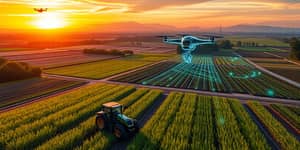
For example, John Deere’s See & Spray system employs computer vision to target weeds precisely, achieving a 90% reduction in herbicide use while maintaining yields. Similarly, drone fleets equipped with multispectral cameras map field variability at scale, empowering farmers with actionable insights.
Sustainable Biotech and Regenerative Practices
Beyond machinery and software, the biotech revolution is cultivating hardier, more nutrient-efficient crops. Gene-editing tools like CRISPR accelerate the development of drought-resistant and climate-smart crops, ensuring harvests remain robust under extreme weather. Microbial inoculants, another frontier, enhance nutrient uptake and bolster plant immunity without synthetic chemicals.
Regenerative agriculture further complements these innovations. By integrating cover crops, reduced tillage, and compost applications, growers restore soil structure, elevate biodiversity, and sequester carbon. Indoor and vertical farms extend this ethos to urban areas, producing leafy greens and herbs with minimal land footprint and consistent output.
Investment Landscape and Funding Trends
Capital flows are steering the next wave of agritech breakthroughs. In 2025, over 60% of venture capital aimed at agriculture targets sustainability- and tech-driven startups. Investors are prioritizing solutions that deliver both financial and environmental returns.
- Venture Capital Focus: Climate-smart platforms, digital integration, resilient seeds, and carbon tracking tools.
- Impact Metrics: Carbon reduction, soil health improvement, and traceable supply chains guide funding decisions.
- Regional Dynamics: The U.S. market fuels rapid innovation, while Europe emphasizes long-term regulatory support and green incentives.
Notable success stories include Farmonaut’s blockchain-based supply chain suite, which offers end-to-end traceability and carbon footprint tracking, and a portfolio of startups from StartUs Insights specializing in bioengineering and AI-driven agronomy.
Overcoming Adoption Challenges and Policy Enablers
Despite the promise of agtech, barriers persist. High upfront costs, integration complexity, and uneven internet connectivity in rural areas hinder adoption. However, strategic partnerships between technology providers, cooperatives, and local governments can bridge the gap.
- Cost and Access: Subsidies, lease-to-own models, and cooperative purchasing pools can lower financial hurdles.
- Technical Support: On-farm training programs and digital literacy initiatives ensure farmers harness full potential.
- Regulatory Framework: Clear guidelines on data security, gene editing, and sustainability incentives catalyze investment.
Forward-looking policies—such as climate-smart subsidies and robust data protection laws—create an environment where innovation thrives. Governments and industry groups must collaborate to balance risk management with dynamic growth.
Looking Ahead: Cultivating a Resilient Future
With the world population approaching 8.5 billion by 2030, the stakes have never been higher. Harnessing sustainable intensification to feed billions will require an integrated approach: merging biotech advances, digital platforms, and responsible investment. By uniting stakeholders across the value chain—farmers, entrepreneurs, investors, and policymakers—we can build a food system that nourishes both people and the planet.
Innovation must remain anchored in practicality. Piloting new technologies on smallholder farms, tracking performance metrics, and iterating solutions based on real-world feedback will ensure that promising ideas scale effectively. Likewise, financing models that couple returns with social and environmental impact will unlock fresh capital available for agritech breakthroughs.
As we sow the seeds of tomorrow, every investment, every data point, and every policy choice can tip the balance toward sustainability. The era of digital, connected, and regenerative agriculture is here—ready to cultivate abundance in harmony with nature.
References
- https://www.icl-group.com/blog/4-key-agrotech-trends-2025/
- https://farmonaut.com/blogs/institutional-farmland-investment-top-5-tech-reforms-2025
- https://invadeagro.com/top-10-innovations-revolutionizing-the-agro-industry-in-2025/
- https://farmonaut.com/blogs/venture-capital-trends-in-agriculture-tech-funds-2025
- https://www.startus-insights.com/innovators-guide/agriculture-trends/
- https://www.globalagtechinitiative.com/digital-farming/the-agtech-outlook-for-2025-recovery-reality-checks-and-opportunities/
- https://www.farmprogress.com/technology/4-trends-drive-innovation-in-ag-technology
- https://www.harvestreturns.com/blog/2024/12/3/ag-investment-trends-to-watch-in-2025