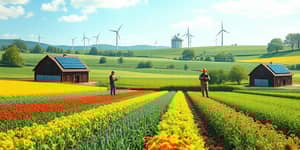
Across the globe, agriculture stands at a crossroads. Traditional methods can no longer meet the demands of a growing population while preserving precious natural resources. Today, precision agriculture offers a way forward—combining innovation, sustainability, and economic opportunity.
Introduction to Precision Agriculture
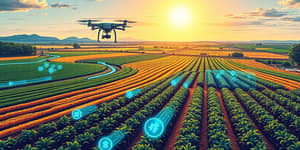
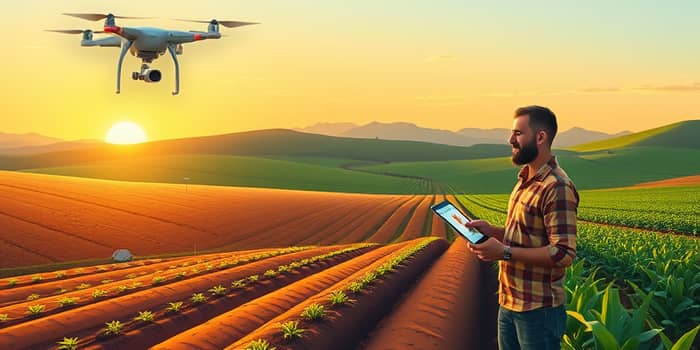
Precision agriculture, often called precision farming, refers to the application of cutting-edge smart farming practices that harness technology to optimize every aspect of crop production. From seeding to harvest, farmers can now use GPS guidance, drones, sensors, and advanced data analytics to make decisions with unprecedented accuracy.
By deploying soil moisture sensors and aerial imaging, growers can map field variability, apply inputs precisely where needed, and dramatically reduce water usage by 20%. This data-driven approach transforms traditional fields into dynamic, responsive systems—maximizing yield while minimizing waste.
Market Size and Growth
The precision agriculture industry has witnessed explosive growth over the past decade, driven by technological advances and rising global food demand. Industry analysts project the global market will surpass $12 billion by 2025, with some estimates reaching $14.18 billion. Beyond that, sustained compound annual growth rates between 12% and 15% foresee a market of nearly $19 billion by 2030.
- 2025: $14.18 billion (estimated)
- 2030: $19 billion (projected)
- 2034: $43.64 billion (long-term outlook)
Such rapid expansion reflects not only the significant economic and environmental benefits of precision farming, but also increasing investment from public and private sectors eager to capitalize on sustainable agriculture solutions.
Regional Analysis
Adoption of precision agriculture varies by region, shaped by infrastructure, policy, and investment. In North America, farmers benefit from robust government programs and advanced technological ecosystems. The market there is expected to grow from $4.71 billion in 2024 to $11.48 billion by 2033.
Meanwhile, the Asia-Pacific region is on track for the fastest growth, fueled by large-scale agricultural modernization in China and India. Governments are launching initiatives to support smart farming, from subsidies on drone purchases to funding for research on data-driven irrigation.
In Latin America and Africa, emerging demand for higher yields and resource efficiency is spurring investments. International development agencies and private investors see huge potential to transform smallholder farms through accessible precision tools.
Key Drivers Behind Growth
- Technological Advancements: Continuous innovation in drones, sensors, and AI-driven analytics is making precision tools more powerful and affordable.
- Sustainability and Environmental Concerns: Farmers and policymakers alike prioritize methods that minimize chemical run-off and minimizing soil degradation effectively.
- Investment and Funding: Both institutional and private investors are channeling capital into agtech startups and established equipment manufacturers.
- Government Support: Subsidies, grants, and favorable policies are accelerating digital agriculture adoption worldwide.
Financing Precision Agriculture
Access to capital remains a crucial factor in scaling precision agriculture. Fortunately, multiple funding avenues are opening up:
Government Grants and Subsidies: Many countries now offer targeted schemes to help farmers purchase precision equipment, from tax credits to low-interest loans.
Venture Capital and Private Equity: Startups developing novel sensors, AI platforms, and autonomous machinery have attracted billions in venture funding, driving rapid innovation.
Traditional Lenders and Cooperatives: Rural credit unions and agricultural banks increasingly recognize the ROI of precision tools, providing tailored financing options.
Smart Farming Technologies and Economic Impact
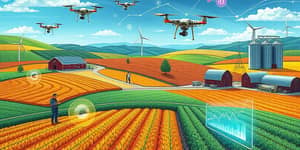
At the heart of precision agriculture lie several transformative technologies. GPS-guided tractors plant seeds with centimeter-level accuracy. Drones collect multispectral imagery to detect pests and nutrient deficiencies. In-field sensors monitor soil moisture and nutrient levels in real time.
These technologies collectively can increase crop yields by up to 30% while reducing fertilizer application by 15%. The integration of smartphone apps and cloud platforms allows farmers to optimize farming practices from any location, turning data into actionable insights that boost profitability.
Sustainability and Environmental Impact
Beyond economic gains, precision farming promotes environmental stewardship. By tailoring inputs to specific field zones, farmers reduce water usage by 20% and cut back on chemical runoff, protecting surrounding ecosystems.
Improved soil health emerges as a key benefit when fertilizer and pesticide applications are precisely managed. Over time, this leads to more resilient and fertile land, ready to sustain higher productivity with lower environmental cost.
Future Outlook
Looking ahead, the fusion of robotics and artificial intelligence promises to push precision agriculture even further. Autonomous harvesters, real-time yield mapping, and predictive disease detection will become standard tools on modern farms.
With the global population expected to reach 9.7 billion by 2050, the need for efficient, high-yield agriculture is urgent. Precision agriculture stands as a scalable solution to meet this demand sustainably, offering significant economic and environmental benefits for farmers and communities worldwide.
Conclusion
Precision agriculture is more than a trend—it represents a fundamental shift in how we produce food. By leveraging data, automation, and smart financing, farmers can achieve higher yields, conserve resources, and safeguard the environment.
As investment in precision technologies continues to flow, the promise of a more productive, sustainable agricultural future draws closer. For growers ready to embrace innovation, the path forward is clear: smart farming means smart money—and a healthier planet for generations to come.
References
- https://farmonaut.com/precision-farming/precision-agriculture-market-growth-2025-trends-drivers
- https://virtuemarketresearch.com/report/precision-agriculture-market
- https://www.imarcgroup.com/north-america-precision-agriculture-market
- https://media.market.us/precision-farming-statistics/
- https://www.consegicbusinessintelligence.com/precision-farming-market
- https://www.precedenceresearch.com/precision-farming-market
- https://www.coherentmarketinsights.com/industry-reports/precision-farming-market
- https://www.grandviewresearch.com/industry-analysis/precision-farming-market