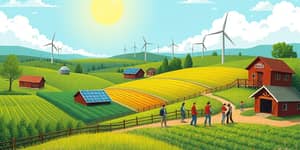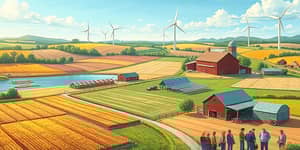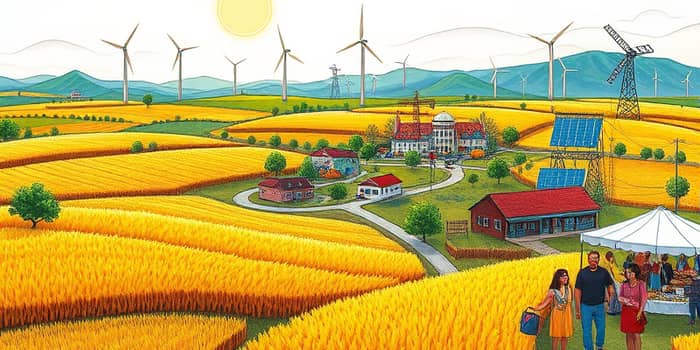
In recent years, rural America has emerged as a fertile ground for investors seeking both impact and profit. Across rolling fields, quiet towns are witnessing a financial renaissance that promises to reshape communities for generations. From upgraded broadband networks to sustainable farming innovations, these investments are forging new pathways for growth and resilience in areas once overlooked by mainstream capital.
Major Investment Trends and Figures
The scale of capital flowing into agricultural and rural development has never been more impressive. Global agriculture investment is projected to reach $1.2 trillion by 2025, with nearly half of that targeting infrastructure and land revitalization.
In the United States, net farm income is forecast to climb by $37.7 billion, a striking 26.4% uptick, driven largely by increase in direct government payments. Meanwhile, rural banking deposits surged by 12%, lifting total deposits to $616 billion and elevating rural banks to 18% of all U.S. bank lending.
Such massive inflows are not limited to agriculture. Infrastructure projects like roads, water systems, and energy grids are capturing budgets from both public and private investors eager to support robust infrastructure and community resilience.
Financial Inclusion and Banking Expansion
Access to financial services in rural regions has expanded rapidly. By 2024, 68% of rural households held formal bank accounts, up from 65% the previous year. Digital adoption also soared, with over 45 million rural users embracing mobile and online platforms—a 22% jump.
The growth of microloans has been particularly transformative. Loans to women entrepreneurs reached $34 billion, reflecting a 15% increase and spotlighting the power of targeted financial programs. At the same time, investments in literacy rose 19% to $1.2 billion, equipping communities with vital money-management skills.
To bridge physical gaps, some regions have deployed mobile branch buses and digital kiosks, ensuring that every resident can access services without venturing miles out of town.
EB-5 Surge and Economic Policy Drivers
The U.S. EB-5 immigrant investor program has also fueled capital flows into rural areas. As of January 2025, rural petitions accounted for nearly 58% of new filings, a dramatic rise from just over 40% in 2022.
One provider saw approved rural EB-5 petitions grow by 70% within four months. These EB-5 funds are often funneled into crucial regional projects, from energy plants to hospitality developments, bringing both capital and job creation to local communities.
Looking ahead, the outcome of the 2024 U.S. elections will be crucial. Federal policies on trade, immigration, and energy could either accelerate or temper this rural boom. For investors, resilience and innovation continue to drive the promise of steady returns, even amid political shifts.
Growth Drivers and New Opportunities
Beyond government programs and capital markets, several dynamic forces are propelling rural investment forward. Technological breakthroughs, sustainability imperatives, and demographic shifts are opening fresh channels for growth.
Innovation hubs and incubators in rural settings are also flourishing, offering mentorship and seed funding to startups that tap into agricultural, tech, and service sectors.
- Precision agriculture and digital platforms improving yields
- Renewable energy projects like wind and solar farms
- Targeted investments in women and minority entrepreneurs
- Broadband expansions facilitating remote work and commerce
Investors increasingly weigh environmental, social, governance criteria when evaluating rural projects. This alignment of profit and purpose ensures that development benefits both stakeholders and the planet over the long term.
Challenges and Solutions
No transformation is without its hurdles. Rural regions face unique constraints that require thoughtful responses from policymakers, communities, and investors alike.
- Childcare accessibility and workforce participation gaps
- Transportation limitations hindering labor mobility
- Skills gaps and educational disparities in rural areas
Partnerships with nonprofits and educational institutions are essential to implement these solutions at scale. When local leaders, investors, and educators collaborate, they can deliver tailored programs that address unique community needs.
Sector Impacts and Investor Considerations
Investors must navigate a complex landscape of opportunities and risks. While commodity prices and policy uncertainty can introduce volatility, sectoral diversity within rural economies offers robust buffers.
- Agriculture and agri-tech ventures
- Renewable energy and biofuels facilities
- Food processing and nutrition-focused production
- Rural housing and hospitality developments
Beyond industry specifics, investors should consider the intangible factors that underpin success. Trust, transparency, and respect for local customs often determine whether a project thrives or stalls.
Projects that prioritize community engagement and partnerships tend to outperform purely transactional investments, fostering goodwill and long-term stability.
The Road Ahead
Rural America stands at a pivotal juncture. With a potent mix of policy support, technological progress, and global capital interest, small towns are rewriting their economic destinies.
For entrepreneurs and investors, the message is clear: the once-overlooked countryside holds unprecedented potential for growth. By marrying financial savvy with empathetic stewardship, stakeholders can ensure that the next chapter of rural America is both prosperous and inclusive.
References
- https://farmonaut.com/blogs/broad-based-agriculture-investment-rural-land-growth
- https://eb5visainvestments.com/2025/06/11/rural-eb-5-processing-times-are-faster-than-ever-a-rural-investment-remains-the-quickest-path-to-a-u-s-green-card/
- https://coinlaw.io/rural-banking-statistics/
- https://www.cobank.com/knowledge-exchange/general/the-year-ahead-forces-that-will-shape-the-us-rural-economy-in-2025
- https://www.richmondfed.org/conferences_and_events/2025/20250520_investing_rural_america
- http://www.ers.usda.gov/data-products/charts-of-note/chart-detail?chartId=110894
- https://www.agsouthfc.com/news/blog/economic-outlook-2025-opportunities-landowners-farmers-and-rural-communities
- https://pcrd.purdue.edu/the-evolution-of-rural-indiana-stats-2025/