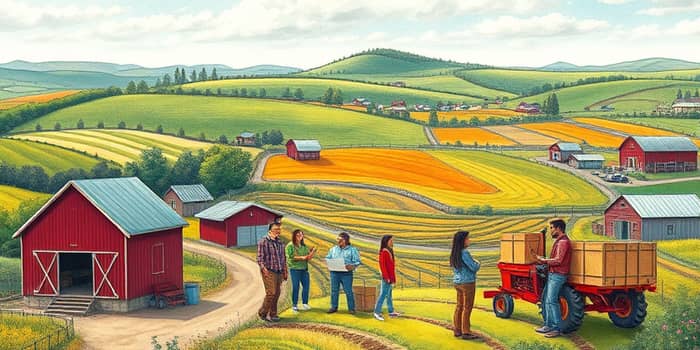
Rural business owners, often working from barns or home offices, face unique pressures and opportunities. In a landscape where community ties run deep, the quest to grow demands both bold vision and practical tactics. This article will guide you through understanding the current state of rural enterprise, identifying growth avenues, and overcoming hurdles with actionable strategies.
The Current Landscape of Rural Enterprise
The backbone of many small towns, rural businesses generate significant economic momentum. According to recent data, the U.S. rural activities market is projected to grow from $2.67 trillion to $2.87 trillion by 2025, boasting a robust 7.7% CAGR. Yet the demographic profile of these enterprises skews older: 36% are over 21 years old and 27% are led by owners aged 65 or above, compared with urban counterparts at 28% and 22% respectively.
In the North Central U.S., home-based ventures dominate: nearly 46% of rural employer businesses operate from residences, with an additional 18% as sole proprietorships without employees. This structure offers flexibility but can limit scale without strategic support.
- Small businesses are a primary source of jobs and economic growth in their communities.
- Rural business owners are often seasoned, bringing decades of experience to their operations.
- Home-based models foster adaptability but may face resource constraints.
Emerging Growth Opportunities
Recent trends signal dynamic potential for rural entrepreneurs. Nonemployer businesses have surged by 25% since 1997, outpacing the decline in employer firms, particularly those with one to nine staff. As of 2021, there were an impressive 3.33 million nonemployer rural ventures versus 1.05 million businesses with employees.
Key sectors capitalizing on this upswing include:
- Construction (15.5% concentration)
- Other services (10.9%)
- Professional, scientific, and technical services (10.8%)
- Agriculture-related businesses (2.9%)
Furthermore, 86% of rural small business owners plan expansion, though only 7% feel they receive ample private sector support. Bridging this gap requires targeted initiatives and community partnerships.
Navigating Challenges in Rural Growth
Several persistent barriers can stall momentum. Inflation tops the list, followed closely by rising input, insurance, and raw material costs. In North America, manufactured product prices jumped 5.8% year-over-year, while raw materials spiked 11.8%, squeezing profit margins.
Labor shortages compound the issue. Although 33% of rural firms expect to hire more staff in 2025, half anticipate no change in their workforce due to recruitment difficulties and wage pressures—average wages have climbed 3.5% recently.
Access to capital remains a critical hurdle. Only 41% of rural businesses sought credit for expansion in 2024, compared to 47% of urban counterparts. This reluctance, paired with limited financial education resources, leaves many ventures cash-strapped when scaling.
Supply chain disruptions also persist, driven by geographic isolation and reliance on regional networks. With operating costs rising faster than revenues for many firms, strategic planning is essential to maintain profitability and community impact.
Building a Supportive Ecosystem
Encouragingly, a range of programs and funding avenues target rural entrepreneurs. Goldman Sachs’ 10,000 Small Businesses initiative has earmarked $100 million for rural education and capital access, supporting over 14,000 ventures and employing 245,000 people nationwide. These programs emphasize results-oriented business training and tailored mentorship, ensuring graduates possess the skills to navigate complex markets.
Government aid is another vital pillar. In 2025, U.S. direct farm payments are forecast at $42.4 billion—an increase fueled by disaster relief and support packages. Growing farm sector equity and asset values may also improve access to commercial lending for expanding operations.
Strategies for Scaling Your Rural Business
To transform challenges into opportunities, rural entrepreneurs can leverage several strategic areas:
- Diversification into Non-Traditional Sectors: Explore professional services, e-commerce, or agritourism to broaden revenue streams.
- Technology Adoption: Implement digital marketing, online storefronts, and remote collaboration tools to reach global customers.
- Workforce Development: Invest in employee training programs and offer competitive wages to attract talent in tight labor markets.
- Local and Regional Collaboration: Build supply chains with neighboring businesses to strengthen community resilience.
- Flexible Operations: Embrace hybrid home-based and satellite locations to reduce overhead and adapt quickly.
By weaving these tactics into a cohesive growth plan, business owners can unlock new markets while fortifying their ties to local communities.
Rural vs. Urban: A Comparative View
Understanding how rural enterprises stack up against urban peers provides valuable perspective. Both segments saw around 40% of firms report revenue growth in 2024. However, rural businesses are:
- Less inclined to seek credit (41% vs. 47%).
- More likely to operate as nonemployers (3.33 million vs. 1.05 million).
- More seasoned in age demographics but less optimistic about hiring.
These contrasts highlight the need for tailored solutions rather than one-size-fits-all approaches. Rural entrepreneurs often excel in adaptability and community engagement, strengths that can be harnessed for larger-scale success.
Looking Ahead: The Future of Rural Business
Despite obstacles, optimism is on the rise. Many rural owners forecast revenue and employment gains over the next 12 months, driven by innovation and strategic partnerships. Continued investment in training, capital access, and technology is critical to sustaining this momentum.
By capitalizing on community roots, embracing modern tools, and forging supportive networks, rural businesses can transcend the silo of isolation. In doing so, they ensure both their own prosperity and the vitality of the communities they serve—proving that growth, no matter how ambitious, is within reach.
References
- https://www150.statcan.gc.ca/n1/pub/21-006-x/21-006-x2025003-eng.htm
- https://www.goldmansachs.com/community-impact/10000-small-businesses/us/news-and-program-information/investing-in-small-businesses-across-rural-communities
- https://www.richmondfed.org/region_communities/regional_data_analysis/regional_matters/2025/how_different_rural_urban_small_businesses
- http://www.ers.usda.gov/topics/farm-economy/farm-sector-income-finances/farm-sector-income-forecast
- https://www.choicesmagazine.org/choices-magazine/submitted-articles/nonemployer-businesses-are-increasing-in-number-in-rural-america
- https://www.thebusinessresearchcompany.com/report/rural-activities-global-market-report
- https://ncrcrd.ag.purdue.edu/2025/07/07/trends-for-rural-small-businesses-in-the-north-central-region-owner-and-small-business-demographics/
- https://www.ers.usda.gov/topics/rural-economy-population/business-industry