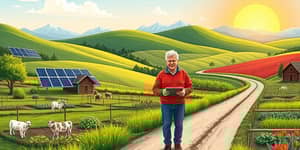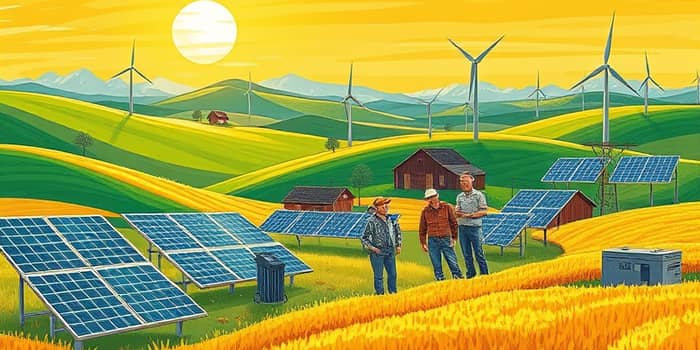
Across isolated valleys and wide open plains, a quiet revolution is underway. Small farms, cooperatives, and family businesses are turning challenges into opportunity by embracing off-grid power solutions. This narrative explores how rural enterprises can harness clean energy to drive profits, foster resilience, and build vibrant communities.
Defining Off-Grid and Distributed Energy Solutions
Off-grid systems operate independently of the central grid, combining technologies like solar panels, wind turbines, and battery storage. These setups ensure power availability in locations where traditional infrastructure is unreliable or nonexistent.
The concept of distributed energy solutions empowers households and businesses to generate, store, and manage their electricity locally. In practical terms, microgrids and hybrid systems can seamlessly switch between renewable sources and stored power, offering uninterrupted energy supply in remote areas.
Market Size, Growth, and Financial Metrics
The global off-grid energy storage market is rapidly expanding. Valued at nearly 9.83 billion dollars in 2024, it is projected to soar to 11.23 billion in 2025 and reach 18.88 billion by 2029, reflecting a compound annual growth rate of around 14 percent. Some sources even place the 2024 valuation near seven billion dollars, underscoring diverse reporting metrics.
This growth is driven by a surge in renewable deployments, technology advances in battery systems, and a pressing need for energy access in rural communities. Solar and wind generation paired with intelligent energy management software are at the core of this expansion.
Technologies Powering the Rural Energy Revolution
Innovation in hardware and software is unlocking new potential. Advances in lithium-ion cells have enhanced energy density, while modular battery energy storage systems (BESS) deliver scalable solutions for farms and small businesses.
Solar panels now offer higher efficiency at lower cost, and small-scale wind turbines can complement them, especially in regions with steady breezes. Combined with real-time monitoring platforms, these technologies optimize generation, storage, and consumption to maximize savings.
Business Opportunities and Economic Impact
For rural enterprises, sustainable energy is more than a cost-saving measure; it is a pathway to profitability and growth. Electric cooperatives already supply thirteen percent of the US electricity load and lead transformative projects in persistent poverty counties. Their model shows how community-driven ownership translates into local benefits and reinvestment.
- High return potential – A ten billion dollar investment in rural green energy can yield over fifty billion dollars in economic development.
- Lease revenue streams – Farmers and ranchers earn steady income by leasing land for solar or wind installations.
- Community ownership – Citizens may own up to seventeen percent of wind and twenty-one percent of solar capacity by 2030 in Europe.
- Job creation – New projects generate skilled positions in installation and maintenance, strengthening local economies.
Policy Landscape: Incentives and Risks
Government programs play a pivotal role. The USDA Rural Energy for America Program assisted over seventeen thousand farms and thirty-two thousand rural businesses between 2014 and 2025, creating and preserving thousands of jobs.
Tax credits under the Inflation Reduction Act have injected eight hundred twenty million dollars into rural projects, boosting grant sizes and cost-share benefits. Yet these incentives face uncertainty. Losing tax credits could double project costs for cooperatives, adding hundreds of millions in annual expenses.
Policy instability remains a critical risk factor. Freezes in funding or changes to clean energy tax structures could threaten ongoing and future projects, making long-term planning difficult for rural entrepreneurs.
Success Stories and Case Examples
Across the country, initiatives are proving the model’s viability. A community cooperative in the Midwest replaced a coal plant with over four gigawatts of wind and solar capacity, unlocking nearly two billion dollars in local investment.
Under the REAP program, rural businesses installed solar arrays, upgraded irrigation systems, and modernized HVAC units. The savings accrued from lower energy bills have been reinvested to expand operations and improve community services.
Major corporations like Meta and Amazon are also driving demand. Their offtake contracts for utility-scale solar projects often stimulate development in rural zones, bringing infrastructure upgrades and workforce training opportunities.
Benefits for Rural Businesses
- Reduced operating costs – Solar and wind installations lower electricity expenses, directly improving profit margins.
- Energy independence – Off-grid systems ensure resilience during outages, safeguarding production and services.
- Local job growth – Installation, maintenance, and supply chain activities create long-term employment.
- Environmental stewardship – Transitioning away from diesel generators cuts emissions and improves air quality.
Barriers and Challenges
- High upfront costs – Initial capital expenditures can be substantial despite grants and financing options.
- Permitting delays – Regulatory hurdles and grid interconnection processes often slow project timelines.
- Policy changes – Uncertainty around incentive programs can stall investments and planning.
Future Outlook and Conclusion
Looking ahead to 2030 and beyond, projections indicate nearly two hundred gigawatts of new utility-scale solar in the US and a continuing rise in off-grid deployments. As technology costs fall and community ownership expands, rural businesses will find more avenues to participate and profit.
By combining strategic investments, supportive policies, and local engagement, off-grid energy solutions can transform isolated regions into thriving economic centers. The journey toward sustainable rural prosperity is well underway, offering a blueprint for resilient, profitable, and connected communities in the digital age.
References
- https://www.intellectualmarketinsights.com/blog/top-leading-companies-in-the-global-off-grid-energy-storage-systems-market-2025
- https://energiesmedia.com/how-renewable-energy-policies-are-building-100m-rural-economies-in-2025/
- https://seia.org/research-resources/solar-market-insight-report-q2-2025/
- https://rmi.org/energy-tax-credits-agricultural-impact/
- https://sustainableagriculture.net/blog/rural-businesses-farmers-lose-while-usdas-rural-energy-program-is-frozen/
- https://www.thebusinessresearchcompany.com/market-insights/off-grid-energy-storage-systems-market-overview-2025
- https://www.rd.usda.gov/programs-services/electric-programs/high-energy-cost-grants