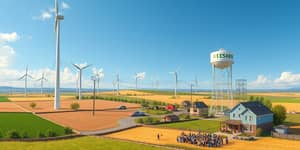
Geographic Information Systems (GIS) have revolutionized environmental science and urban planning. Today, they are poised to transform rural finance by linking geographic data to financial planning. This article explores how financial GIS tools can empower rural communities, optimize resource allocation, and drive inclusive economic growth.
By integrating spatial analysis with financial decision-making, stakeholders can move beyond intuition to data-driven decision-making that truly reflects local needs and potentials.
Understanding GIS and Its Financial Role in Rural Areas
At its core, GIS captures, stores, analyzes, and visualizes geographic information tied to demographic, infrastructure, and economic attributes. Initially embraced by environmental and geological scientists, its scope has expanded to include social and financial planning.
Key data types include population density, road networks, income levels, bank branch locations, land use, and even real-time satellite imagery. When financial institutions overlay these layers, they gain mapping financial deserts with precision, identifying underserved areas and tailoring interventions accordingly.
Transforming Bank Networks with GIS-Based Strategies
Banks and cooperatives leverage GIS to optimize branch and ATM networks. By analyzing foot traffic, competitor locations, and demographic trends, they can strategically position new outlets and avoid service overlaps.
- Identify underserved regions with high demand
- Analyze competitor density to avoid oversaturation
- Predict customer footfall based on demographic shifts
- Use local business activity to forecast growth
For example, a retail bank in Pune, India employed GIS-driven site selection and recorded a 30% higher customer turnout in its first quarter. Such successes highlight how empowering underserved rural communities fosters trust and drives financial inclusion.
Enhancing Credit Management and Loan Recovery
Financial GIS tools enable thematic mapping of agricultural loans, allowing credit officers to monitor land use, crop health, and weather patterns. By integrating real-time satellite data, institutions can assess risk dynamically and revise loan terms proactively.
- Monitor crop conditions through remote sensing
- Integrate weather forecasts for risk analysis
- Highlight high-default risk areas for intervention
- Tailor loan restructuring strategies by location
Centralized, web-based platforms enable swift identification of default hotspots, accelerating recovery processes. This real-time adaptive financial strategies approach reduces non-performing assets and safeguards rural livelihoods.
Resource Allocation and Infrastructure Development
Beyond banking, GIS assists governments and NGOs in land use planning and infrastructure deployment. By evaluating soil suitability, water sources, and existing road networks, planners can determine the most effective allocation of funds.
Road and utility planning benefits from traffic density and wear-pattern analysis, ensuring sustainable maintenance schedules. Similarly, water and power distribution schemes leverage spatial models to prioritize high-demand localities and minimize losses.
Such integrated planning drives data analytics for resource optimization, boosting the impact of every dollar spent in rural development projects.
Socioeconomic Mapping for Targeted Financial Inclusion
Combining census data with spatial layers unlocks nuanced insights into economic vulnerability. Block-group level analysis empowers micro-targeting of financial services, ensuring loans, insurance, and training reach those who need them most.
Visualizing income, employment, and education metrics spatially reveals pockets of poverty and opportunity. Planners can then monitor the progress of financial initiatives over time, using GIS to visualize economic changes over time and adjust strategies to maximize impact.
Real-World Case Studies
Jackson County, Kentucky, USA, leveraged 1990 census block-group data to map socio-economic patterns and guide grassroots empowerment. The resulting plans fostered localized crop diversification and targeted lending programs.
In India and parts of Africa, GIS-driven rural road and utility optimization enhanced connectivity to markets and improved access to clean water. These efforts boosted smallholder productivity and market access by reducing transportation costs and time.
The Indian Smart Village initiative demonstrates how synchronized GIS applications in road planning, utility management, and disaster preparedness create resilient, self-sustaining communities.
Overcoming Challenges and Building Capacity
Despite its promise, financial GIS in rural settings faces hurdles. Many regions lack up-to-date spatial data, and technical expertise can be scarce. Investments in training local staff and upgrading digital infrastructure are essential.
Transitioning from paper-based surveys to digital mapping demands organizational change management and stakeholder buy-in. Building partnerships with universities, NGOs, and government agencies can bridge knowledge gaps and foster sustainable adoption.
Innovations Shaping Future GIS Applications
Advances in satellite and remote sensing technology enable continuous monitoring of environmental and infrastructural changes. Coupled with centralized web-based GIS platforms, stakeholders can access real-time insights from desktops or mobile devices.
Emerging trends include the integration of machine learning for predictive risk modeling and the use of Internet of Things (IoT) sensors to feed live data into GIS dashboards. These innovations promise synchronized financial and spatial insights that adapt swiftly to evolving rural dynamics.
Policy Frameworks and Institutional Collaboration
Governments are increasingly mandating GIS use in rural development policies, from financial inclusion mandates to Smart Village programs. Banking regulators encourage spatial analysis to prevent service deserts and ensure equitable access.
- Government agencies set national geospatial data standards
- Private banks and cooperatives adopt GIS for strategic outreach
- NGOs leverage spatial data for advocacy and impact evaluation
Collaborative frameworks that share data and best practices across sectors accelerate progress. When financial institutions, planners, and community groups unite, they create a sustainable ecosystem of informed decision-making.
Conclusion
Financial GIS is more than a technological tool—it is a catalyst for rural transformation. By embracing spatial analysis, stakeholders can unlock hidden potentials, bridge service gaps, and foster equitable growth.
Through strategic collaboration, capacity building, and innovative platforms, GIS-driven financial planning offers a path to resilient, thriving rural communities. The future of rural development lies in the powerful convergence of geography and finance.
References
- https://egrove.olemiss.edu/cgi/viewcontent.cgi?article=1199&context=jrss
- https://www.sgligis.com/gis-for-smart-village-rural-development/
- https://www.korem.com/gis-data-for-financial-services/
- https://www.numberanalytics.com/blog/gis-in-rural-development
- https://gisnavigator.co.uk/gis-in-banking-and-finance-sector/
- https://qmipl.com/2025/03/03/gis-significantly-enhances-rural-development-and-smart-village-planning/
- https://gis.usc.edu/blog/why-is-gis-important-in-urban-planning/