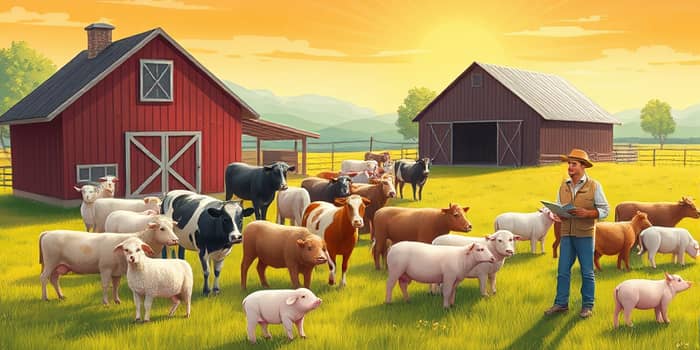
In today’s evolving agricultural landscape, animal producers face growing pressure to expand and modernize operations to meet rising demand. Livestock loans are critical tools that enable farmers and ranchers to acquire necessary resources, from purchasing new breeding stock to upgrading facilities. This article explores the full spectrum of livestock financing, offering holistic coverage of the subject and practical guidance for successful applications.
By understanding the various loan types, lender options, eligibility criteria, and emerging trends, producers can position themselves to secure vital capital. Whether you are a seasoned rancher or a beginning farmer, this comprehensive guide will help you navigate the complex world of animal agriculture financing.
Definition and Purpose of Livestock Loans
Livestock loans are a specialized subset of agricultural financing designed to support the purchase, care, and expansion of herds. They cover a range of needs including feed, animal health, facility improvements, and operational expenses.
Beyond the immediate purchase of animals, these loans empower producers to invest in long-term productivity. By allocating funds toward better housing, nutrition, and veterinary care, farmers can enhance herd health, boost reproduction rates, and maximize profitability.
Types of Livestock and Farm Loans
Producers can choose from a variety of loan products tailored to their specific scale and objectives. The following table summarizes the major categories, their purposes, and primary terms.
This range of products ensures that both small-scale and large-scale producers can access capital suited to their operational stage and risk profile.
Major Lenders and Funding Sources
The primary funding sources for livestock operations include government agencies, cooperative systems, traditional banks, and emerging digital lenders.
The USDA Farm Service Agency (FSA) stands at the forefront, offering direct and guaranteed loans for operating, ownership, and emergency needs. Its programs feature competitive interest rates and flexible terms, particularly for beginning and underserved producers.
Regional cooperatives under the Farm Credit System play a significant role, returning a portion of profits to members through patronage. Farm Credit Mid-America alone has returned over $1.5 billion in nine years, reflecting strong borrower benefits.
Nationalized and private commercial banks, along with non-banking finance companies, provide additional options, often with expedited approvals and customized service. Meanwhile, digital platforms are streamlining application processes with digital farm records for faster eligibility assessments and real-time decision-making.
Eligibility and Application Requirements
While each lender sets its own criteria, most require similar documentation and qualifications. Below is a consolidated list of common requirements.
- Proof of identity, residence, and legal borrowing capacity
- Land ownership or lease documentation (titles, agreements)
- Detailed farming experience records or project descriptions
- Income documentation, tax returns, and sale receipts
- Acceptable credit history; no federal debt at loan closing
- Evidence that other credit sources are insufficient (for FSA)
- Collateral appraisals (equipment, livestock, property)
Youth and beginning farmer programs carry additional requirements, such as supervised agricultural project plans (often via 4-H or FFA) and land ownership caps for new entrants.
Loan Amounts and Terms
Loan sizes and repayment terms vary widely based on the product and lender. Understanding these differences is crucial for selecting the right option:
Operating Loans can reach up to $400,000 with annual reviews to ensure ongoing viability. Microloans, designed for small-scale or specialty producers, typically range from $50,000 to $100,000, featuring simplified applications and faster turnaround.
Farm Storage Facility Loans allow borrowers to invest up to $500,000 in dedicated infrastructure, while youth loans cap at $5,000 to support educational projects. Term loans for real estate or major equipment purchases may extend up to 30 years, offering stability and predictable payments.
Application Process
Successful loan applications hinge on thorough preparation and clear presentation of financial needs. The following steps outline a typical process:
- Collect personal and business identification documents
- Assemble a detailed business plan and projections
- Provide income statements, tax returns, and expense records
- Submit collateral appraisals and title documentation
- Complete lender-specific application forms and disclosures
- Respond promptly to follow-up information requests
Digital lenders may request geo-tagged field data and scanned invoices to expedite verification. Building a transparent relationship with your lender fosters trust and can accelerate approvals.
Recent Trends & Innovations
The agricultural finance sector continues to evolve, driven by technology and shifting market demands. Key innovations include:
- Digitization of records for real-time eligibility checks and e-signatures
- Integration of loan products with insurance packages for risk mitigation
- Patronage programs return some profits to cooperative members, lowering net borrowing costs
- Flexible rate structures, including adjustable, variable, fixed rate flexibility
These advancements enhance transparency and allow lenders to tailor products more closely to producer needs, reducing barriers to entry and improving service quality.
Practical Advice for Applicants
To maximize your chances of securing livestock financing, follow these best practices:
Maintain clear, up-to-date financial records, including expense ledgers and sales invoices. Establish formal titles for land and equipment to streamline collateral appraisals.
Prepare a detailed cash flow analysis, showing projected income and expenses over the loan term. Lenders seek evidence of repayment capacity, so include conservative estimates and contingency plans.
Engage with technical advisors or local extension agents to strengthen your business plan and identify risk management strategies, such as pairing loans with livestock insurance.
Conclusion
Livestock loans open doors to expansion, modernization, and improved profitability in animal agriculture. By understanding loan types, lender options, eligibility criteria, and emerging trends, producers can craft compelling applications and secure vital capital.
Whether you are expanding an established ranch or embarking on your first agricultural venture, leverage these insights and practical tips to navigate the financing landscape with confidence. Careful planning, thorough documentation, and honest communication with lenders will pave the way to sustainable growth and long-term success in livestock production.
References
- https://www.bankiowa.com/blog/post/requirements-for-obtaining-a-farm-loan
- https://farmonaut.com/blogs/agriculture-equipment-loans-2025-farm-loan-guide
- https://www.nationalbusinesscapital.com/blog/best-farm-loans/
- https://www.farmers.gov/loans
- https://www.fcma.com/loans/livestock
- https://janusfarmloans.com/how-to-get-approved-for-a-farm-loan-in-2025/
- https://www.fsa.usda.gov/resources/beginning-farmers-and-ranchers-loans
- https://www.fsa.usda.gov/resources/farm-loan-programs