In 2025, agribusiness stands at the crossroads of opportunity and challenge. With global cereal production hitting a record-high level of 2.925 billion tonnes and U.S. net farm income soaring to $180.1 billion, the industry’s economic footprint has never been more pronounced. Yet beneath the surface of these impressive numbers lie mounting pressures—from volatile markets to climate risks—that demand decisive action and creative solutions.
Global Scale and Economic Significance
Agribusiness is the backbone of many national economies, contributing significantly to employment, GDP, and trade balances. In the United States alone, net farm income is forecast at $180.1 billion for 2025, a staggering 29.5% increase over the previous year. This surge underscores the sector’s resilience and its critical role in driving rural economic development worldwide.
Globally, cereal production is expected to reach an unprecedented 2.925 billion tonnes, with wheat output at 805.3 million tonnes and rice at a record 555.6 million tonnes. Livestock and poultry purchases in the U.S. are also projected to climb to a record $50.5 billion, highlighting continued expansion in animal agriculture. Together, these figures illustrate agribusiness’s dual mandate: feeding billions of people daily and providing livelihoods for millions of farming families.
Rising Costs and Operational Challenges
Despite robust production numbers, many farmers face an uphill battle against inflationary pressures. Input costs for seeds, fertilizers, and chemicals have become a major concern. While U.S. fertilizer expenses are expected to decline by 11.1% to $29.2 billion in 2025 and pesticide costs drop 6% to $18.1 billion, seed expenses are climbing again—up 4.2% to $27.7 billion as planted acreage expands.
These shifting cost dynamics, combined with persistent supply chain disruptions, have eroded profit margins and increased debt burdens, particularly for small and medium-sized farms. Labor shortages further compound these challenges; as younger workers migrate to urban areas, the agricultural workforce ages, straining operations that rely on seasonal labor. Addressing these issues will require strategic investments and innovative approaches to resource management.
Market Volatility and Commodity Prices
Commodity markets in 2025 are characterized by high volatility. Agricultural prices are expected to decrease by around 4% globally, driven by fluctuating demand, unpredictable weather events, trade tensions, and shifts in energy costs. Although prospects for stabilization in 2026 remain positive, the path ahead is uncertain.
One factor providing some relief is the fertilizer affordability index, which has returned to pre-pandemic levels. However, geopolitical risks—such as conflicts affecting fertilizer supply—could quickly reverse this trend. Farmers, traders, and policymakers must therefore prepare for rapid price swings and develop robust risk mitigation strategies to safeguard food security and economic stability.
Regional Perspectives and Food Security
Regional dynamics reveal contrasting fortunes. In Asia, Indonesia has achieved rice reserves at a 23-year high of 3.18 million tonnes, thanks to surges in production. The Philippines reported 1.9% output growth and rice price deflation of 10.9% year-over-year in early 2025. Yet in Central America and the Caribbean, drought conditions led to a 7.5% decline in cereal production between 2023 and 2024, tightening local food supplies.
Food insecurity remains acute in areas afflicted by conflict, natural disasters, and trade disruptions. In Myanmar, an earthquake in 2025 worsened food shortages, pushing the number of people facing acute hunger to 15.2 million. This highlights the urgent need for coordinated global responses to hunger and infrastructure investments that protect supply chains against shocks.
Climate Risks and Long-Term Challenges
Climate change is an ever-present threat to agribusiness. Extreme weather events—heat waves, floods, droughts, and storms—are already denting yields of maize, rice, soybeans, and wheat. In South America, disease outbreaks have jeopardized maize harvests, while typhoons in Asia and droughts in Africa continue to disrupt planting and harvest cycles.
Pathways to Resilience and Sustainable Growth
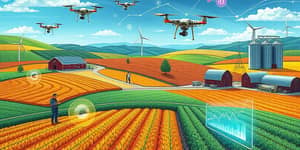
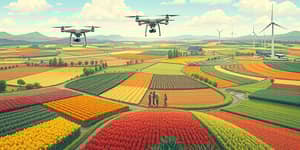
Building resilience requires a multipronged approach. Investment in climate-smart agriculture technologies, such as drought-resistant seeds and precision irrigation systems, can help stabilize yields. Expanding research and development fosters innovation in fertilizers, pest management, and digital farming tools that enable data-driven decisions on planting, fertilizing, and harvesting.
Governments and industry stakeholders must also collaborate on policy frameworks that support sustainable practices. Incentives for carbon sequestration in soils, payments for ecosystem services, and subsidies for renewable energy adoption on farms can reduce environmental impacts while enhancing profitability. Embracing public–private partnerships for sustainable development will be key to scaling effective interventions and ensuring agribusiness contributes to both economic growth and environmental stewardship.
Conclusion
The agribusiness sector in 2025 embodies both triumph and trial. Record production and rising incomes demonstrate its powerful economic role, yet the lingering specter of inflation, labor shortages, market volatility, and climate change tempers optimism. By investing in innovation, forging strategic partnerships, and prioritizing sustainability, stakeholders can navigate these complexities and ensure that agribusiness continues to fulfill its vital mission: feeding the world sustainably for generations to come.
References
- http://www.ers.usda.gov/topics/farm-economy/farm-sector-income-finances/farm-sector-income-forecast
- https://www.fao.org/worldfoodsituation/csdb
- https://blogs.worldbank.org/en/developmenttalk/risks-and-challenges-in-global-agricultural-markets
- https://agtech.folio3.com/blogs/top-agriculture-issues-for-farmers-in-2024/
- https://farmpolicynews.illinois.edu/2024/12/us-global-ag-economies-face-uncertainties-heading-into-2025/