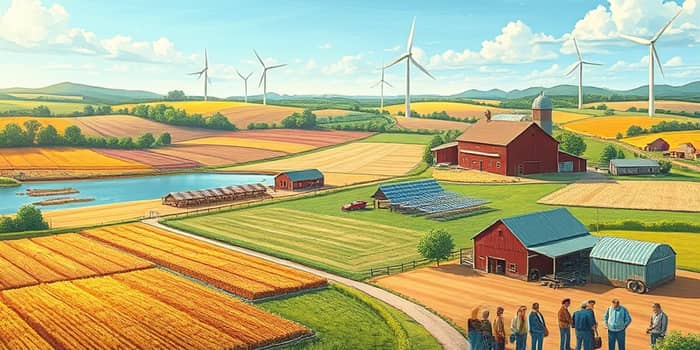
Rural entrepreneurs are redefining the boundaries between agriculture and enterprise, transforming small farms into dynamic hubs of innovation and community engagement. Despite facing persistent challenges, particularly inflation and labor shortages, many rural businesses demonstrate remarkable resilience. This article explores the economic trends, demographic insights, financial performance, and practical strategies that can help you cultivate a thriving rural venture.
Whether you operate a homebased startup, a decades-old family farm, or a value-added processing facility, understanding the nuances of the rural landscape in 2025 is crucial. From government support to grassroots innovation, farmers and small-business owners have an array of tools at their disposal. Let’s dive into the data and tactics that will guide your journey from farm to fortune.
Economic Landscape of Rural Enterprises
In 2025, the rural business outlook remains a study in contrasts. On one hand, inflation remains the most reported obstacle, with the rising cost of inputs and insurance weighing heavily on budgets. On the other, there is a surge of optimism driven by strong farm income forecasts and steady asset appreciation.
Farm cash receipts are forecast at $515.0 billion, while net cash farm income is projected to reach $193.7 billion, up 21.7% from the prior year. This growth is buoyed by direct and indirect government support, including $42.4 billion in disaster relief and farm payments. Production expenses are set to decline slightly to $450.4 billion, easing some cost pressures.
Rural employment trends are mixed. Wages grew by 3.5% year over year, yet the unemployment rate hovers at 6.0%. Approximately 33% of rural businesses expect to expand their workforce in the next 12 months, a sign that many entrepreneurs are prepared to reinvest in people despite tight labor markets.
Navigating Cost Pressures and Accessing Capital
Managing costs and securing financing remain two of the most formidable hurdles. Insurance premiums, supply chain disruptions, and fluctuating input prices can erode margins quickly. Yet, rural enterprises have unique financing avenues through community banks and targeted grant programs.
To illustrate the financial climate, consider the following summary of key metrics:
Key strategies for easing cost pressures include:
- Negotiating bulk purchase agreements for seeds, feed, and fertilizer to lower unit input costs.
- Building relationships with community banks that understand your local market dynamics.
- Tapping into government programs and disaster relief funds to stabilize cash flow.
Building and Retaining a Skilled Workforce
Labour shortages and retention are top concerns for rural businesses. With a higher average owner age—27% aged 65+—and 36% of firms over 21 years old, succession planning and skill renewal are pressing issues.
Nearly half of rural businesses are homebased employers, offering flexibility that can be leveraged to attract talent. Initiatives to consider:
- Implementing remote and hybrid roles for administrative and technical tasks.
- Investing in role-specific upskilling programs through local colleges and extension services.
- Offering performance incentives tied to productivity and innovation milestones.
By fostering a culture of continuous learning and competitive compensation, rural entrepreneurs can build a reliable workforce, reduce turnover, and enhance overall productivity.
Embracing Innovation and Diversification
Innovation in rural settings is thriving. Studies show that rural manufacturers adopt new technologies at rates comparable to urban peers, though educational gaps can pose challenges. Small plants in diverse counties often lead the way, benefiting from strong community networks and homebased community resilience.
Examples of successful diversification include:
- Energy ventures such as ethanol production, wind farms, and biogas generation.
- Value-added food products like artisan cheese, preserves, and specialty grains.
- Recreation-based enterprises, from farm stays to agritourism festivals.
By combining traditional agriculture with modern industry, rural businesses can buffer against commodity cycles and tap into high-margin markets.
Strategies for Sustainable Growth
Driving long-term prosperity requires a holistic approach. Here are actionable strategies that can convert steady operations into dynamic growth engines:
- Leverage Local Partnerships: Collaborate with nearby producers and cooperatives to share resources and expand distribution networks.
- Utilize Digital Marketing: Build an online presence, sell direct to consumers, and tell your story to command price premiums.
- Expand into Niche Markets: Identify underserved segments—organic, gluten-free, or ethnic foods—and tailor offerings to meet demand.
- Reinvest in Infrastructure: Upgrade equipment, storage, and logistics to increase efficiency and reduce waste.
By integrating these tactics, rural businesses can achieve a balance between scaling operations and preserving the community spirit that defines them.
Social and Cultural Impact of Rural Businesses
Rural enterprises do more than generate revenue; they serve as community anchors. Farmers’ markets become social hubs, local shops sponsor events, and family-owned operations support schools and charities. This unique social value beyond profit fosters loyalty and drives word-of-mouth marketing.
Communities with strong social capital often exhibit higher resilience in crises. Whether facing natural disasters or market downturns, the trust and collaboration among neighbors can expedite recovery and innovation.
Ultimately, by recognizing both the economic and cultural dimensions of rural enterprise, you can build a business that is profitable, sustainable, and deeply woven into the fabric of your community.
References
- https://www150.statcan.gc.ca/n1/pub/21-006-x/21-006-x2025003-eng.htm
- https://www.richmondfed.org/region_communities/regional_data_analysis/regional_matters/2025/how_different_rural_urban_small_businesses
- https://ncrcrd.ag.purdue.edu/2025/07/07/trends-for-rural-small-businesses-in-the-north-central-region-owner-and-small-business-demographics/
- https://www.ers.usda.gov/topics/rural-economy-population/business-industry
- http://www.ers.usda.gov/topics/farm-economy/farm-sector-income-finances/farm-sector-income-forecast
- https://www.fedsmallbusiness.org/categories/rural-and-urban
- https://www.fedsmallbusiness.org/reports/survey/2025/2025-main-street-metrics
- https://www.jpmorganchase.com/institute/all-topics/business-growth-and-entrepreneurship/the-rural-divide-small-business-revenue-milestones-in-the-us