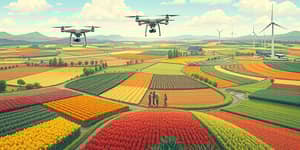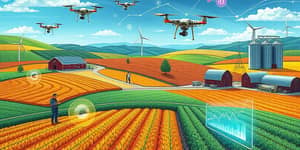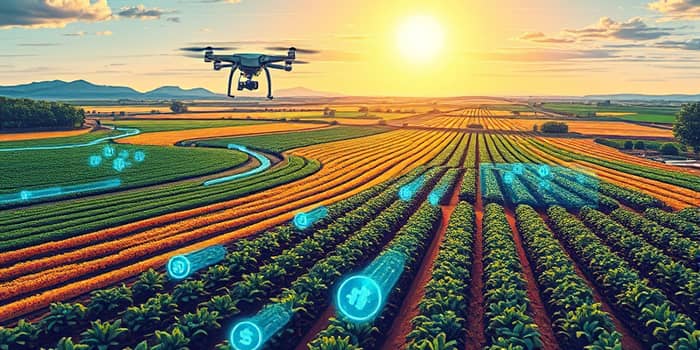
In an era where data and sustainability converge, agriculture is undergoing one of its most profound transformations. From tiny sensors buried in soil to global financial markets, technology is reshaping how farmers access capital, manage risk, and contribute to a greener planet. This article explores the innovations driving agribusiness finance into the digital age.
The Digital Revolution in the Fields
The global digital agriculture market is set to grow at a robust pace, with experts projecting a 9.17% year-over-year CAGR from 2025 to 2030. This expansion reflects surging demand for tools that optimize yields, reduce waste, and strengthen resilience against climate change. Venture capital firms are responding in kind: in 2025, over 60% of agriculture VC funds are targeting startups that blend sustainability with advanced technologies.
A key driver of investment is the integration of AI-powered predictive analytics and GenAI into every stage of food production. From breeding drought-resistant crops in laboratories to guiding tractors across fields with precision, these tools are unlocking efficiencies that translate directly into financial savings and reduced risk for investors and lenders.
Precision Finance with Data Analytics
Today’s lenders and insurers are no longer content with static historical reports. Instead, they tap into real-time streams of sensor data, satellite imagery, and weather forecasts to evaluate farm health on the fly. This shift has given rise to data-driven creditworthiness and underwriting assessments that reflect current conditions rather than year-old estimates.
- Predictive models forecast yields weeks ahead of harvest.
- Variable-rate financing aligns loan terms with actual crop performance.
- Insurance products adapt to emerging weather anomalies in real time.
By connecting financial products directly to field-level insights, agribusiness stakeholders can tailor terms and premiums more accurately, reducing default risk and encouraging broader adoption of climate-smart practices.
Blockchain and Supply Chain Transparency
Consumers and regulators alike demand proof that food is safe, ethical, and sustainable. Blockchain technology delivers transparent and tamper-proof food traceability systems that track every stage of the supply chain. As a result, financiers can verify collateral quality, mitigate fraud, and accelerate payments based on verified milestones rather than subjective assessments.
Smart contracts automate key financial triggers: a shipment scanned by a logistics partner can instantly release funds, and carbon credits awarded for regenerative practices can be tokenized and traded. This confluence of finance and technology streamlines capital flows while reinforcing trust among producers, buyers, and financial institutions.
Market Projections and Financial Incentives
Several segments within agritech are attracting outsized interest due to their high growth potential and clear links to sustainability outcomes. Financial instruments are also evolving: digital tokens, rewards programs, and green bonds provide farmers with tangible incentives to adopt best practices.
These figures underscore both the scale of emerging opportunities and the appetite among investors for novel, impact-driven financial products. In parallel, digital rewards or tokens tied to regenerative practices link sustainability directly to farmers’ bottom lines.
The Rise of Digital Twins in Agriculture
Digital twins—virtual replicas of real-world fields and farms—are empowering agribusinesses to simulate countless scenarios without risking valuable crops. By modeling irrigation schedules, nutrient applications, and weather events, these systems offer real-time simulation of complex farm environments that inform smarter investment decisions.
Lenders leverage digital twins to stress-test portfolios under varying climate scenarios, while farmers gain a sandbox for experimenting with innovative methods. The result is a tighter feedback loop between operational choices and financial outcomes, fostering a new era of precision finance.
Sustainability, Regenerative Practices, and Green Capital
Regenerative agriculture is no longer a niche pursuit—it’s a major criterion for funding. Investors and lenders increasingly require hard data on soil health, carbon sequestration, and biodiversity improvements. Platforms now integrate third-party sustainability verification metrics with satellite analytics and carbon footprint tracking, ensuring transparency and accountability.
- Carbon credit marketplaces reward verified sequestration.
- Green loans offer preferential terms for regenerative adopters.
- Impact investors prioritize projects with measurable environmental gains.
This alignment of ecological stewardship and financial reward is driving a virtuous cycle: the more measurable the impact, the more attractive the financing, leading to broader adoption of restorative practices.
Challenges on the Road to Digital Adoption
Despite the promise, hurdles remain. Many rural areas lack reliable connectivity, and the initial cost of sensors and platforms can be prohibitive for smallholders. Data governance raises concerns about privacy, ownership, and cybersecurity risks. Meanwhile, a shortage of digital skills among farmers and extension workers slows uptake.
- High capital expenditure for advanced tools.
- Poor rural internet infrastructure in developing regions.
- Complex data privacy and regulatory requirements.
- Cybersecurity vulnerabilities in connected devices.
- Limited digital literacy among farm operators.
Addressing these barriers will require public-private partnerships, targeted training programs, and adaptive policy frameworks that balance innovation with protection.
Future Outlook: Policy, Regulation, and Innovation
Governments around the world are introducing incentives, subsidies, and mandates to accelerate technology adoption in agriculture. Regulatory bodies are crafting guidelines for data sharing, certification standards, and financial disclosures tied to sustainability metrics. In this evolving landscape, agility is paramount: agribusinesses and financiers must stay ahead of policy shifts while continuing to innovate.
Looking forward, we can expect deeper integration of decentralized finance (DeFi), expanded carbon markets, and AI-driven credit platforms tailored to the unique rhythms of farming. Collaboration among agronomists, technologists, financiers, and policymakers will be essential to unlocking the full potential of digital agrifinance and ensuring that technological progress translates into shared prosperity for farms of all sizes.
By embracing these tools and overcoming the challenges, the agriculture sector stands poised to cultivate not only crops but also a more sustainable and equitable financial ecosystem—where every seed sown carries the promise of growth, resilience, and innovation.
References
- https://farmonaut.com/blogs/venture-capital-trends-in-agriculture-tech-funds-2025
- https://eos.com/blog/agritech-market-overview-and-trends-for-2025-2030/
- https://www.statifacts.com/outlook/us-digital-agriculture-market
- https://www.oldnational.com/resources/insights/disrupting-agriculture-how-ai-and-data-are-powering-the-2025-agtech-revolution/
- https://www.croplife.com/smart-tech/5-key-trends-in-artificial-intelligence-that-will-revolutionize-agriculture-in-2025/
- https://www.icl-group.com/blog/4-key-agrotech-trends-2025/
- https://www.globalagtechinitiative.com/digital-farming/top-5-agtech-trends-for-2025-whats-next-for-regenerative-agriculture/
- https://www.weforum.org/stories/2025/01/delivering-regenerative-agriculture-through-digitalization-and-ai/