In an era where food security and sustainable growth stand at the forefront of global priorities, agribusiness presents a compelling frontier for investors. With shifting climate patterns, evolving consumer demands, and rapid technological advancements, the sector offers both challenges and immense opportunity. This article delves into the latest data, strategic frameworks, and emerging trends that define effective investment in agribusiness by 2025.
As the world grapples with feeding a population projected to exceed 9.7 billion by 2050, innovative investment approaches become essential. From traditional farmland ownership to cutting-edge AgTech ventures, capital deployment across the agricultural value chain can drive strong returns and lasting impact. Below, we explore key insights, best practices, and risk mitigation strategies tailored for today’s dynamic market environment.
Market Size and Outlook
Global agribusiness investments are entering a phase of unprecedented scale and scope. Industry forecasts project global agribusiness investments are projected to surpass $1.5 trillion in 2025, fueled by growing demand for sustainable food systems and advanced farming technologies.
In the United States alone, agricultural investment funds are set to grow at an annualized rate of 8%, reaching $20 billion in assets by the end of 2025. Meanwhile, net farm cash income is forecast at $193.7 billion (up 18.8% year-on-year), and net farm income is expected to climb to $180.1 billion, a 26.4% increase from the previous year. A significant driver of this growth is the surge in direct government payments, which rose to $42.4 billion from $9.6 billion year-on-year.
Investment Vehicles and Key Players
Investors seeking exposure to agribusiness can choose from a spectrum of vehicles, each with distinct return profiles and risk exposures.
- Farmland REITs: Publicly traded entities such as Gladstone Land Corporation (LAND) and Farmland Partners Inc. (FPI) offer 2025 ROI between 6.5% and 7.2%, with a historical three-year CAGR around 6–7%.
- Private farmland funds: Major players like Nuveen Global, UBS Farmland Investors, and Homestead Capital forecast returns of 7.5%–9.2%, often emphasizing ESG criteria, water management, and soil health.
- Minimum investment requirements: Entry thresholds typically range from $100,000 to $500,000, making private funds accessible to high-net-worth individuals and family offices.
Strategic Approaches to Agribusiness Investment
To optimize risk-adjusted returns, investors should integrate multiple strategies across production, technology, and supply chain management.
- diversification across asset classes: Blend traditional row crops and grains with AgTech startups, alternative proteins, and bioenergy crop projects to minimize market volatility through diversification.
- climate-focused risk analysis: Prioritize regions and crop varieties resilient to drought, floods, and temperature shifts, leveraging advanced climate modeling.
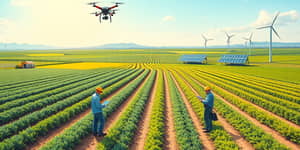
- precision agriculture and digital platforms: Invest in precision agriculture, digital platforms like Farmonaut, smart irrigation systems, and remote sensing to boost yields and efficiency.
- vertical integration improves margin and quality: Control production through processing and distribution channels to enhance margins and quality assurance.
- ESG alignment and green incentives: Utilize green bonds, subsidies for regenerative practices, and traceable supply chains to meet investor and regulatory demands.
Emerging Trends and Themes for 2025
Several powerful themes are shaping the agribusiness investment landscape over the next two years:
- regenerative and climate-smart agriculture: No-till farming, cover cropping, integrated pest management, and circular bioeconomy models turn waste into renewable resources.
- renewed AgTech M&A activity: Q1 2025 saw a 19% YoY increase in deals, driven by lower interest rates and government aid boosting private equity’s share.
- supply chain resilience strategies: Firms are diversifying export markets and building buffer stocks to mitigate tariff shocks and trade disruptions.
- ESG-driven capital allocation: Investors prioritize projects with measurable environmental and social impact, spurring growth in traceability and impact investing.
Key Metrics and Expense Dynamics
Understanding cost structures and return benchmarks is essential for informed decision-making.
Fertilizer and pesticide expenses are falling, with fertilizer costs down $3.6 billion to $29.2 billion and pesticide costs down $1.2 billion to $18.1 billion in 2025. Seed expenses, however, are rebounding by $1.1 billion, reflecting adjustments to acreage and unit pricing.
Top-performing funds and REITs aim for 2025 ROI in the 6.5%–9.2% range. Below is a snapshot of US soybean production metrics for the 2025 season:
Risk Factors
Agribusiness investments are subject to unique risks that require proactive management:
Commodity price fluctuations: Oversupply and soft export demand can depress crop and livestock prices, while beef markets may tighten due to reduced production.
Policy sensitivity: Government relief and tariff shifts can dramatically influence farm incomes and investment returns, underscoring the need for agile strategy adjustments.
Interest rate exposure: High borrowing costs can constrain farmer capex and technology adoption, so investors should monitor central bank policies closely.
Regional Dynamics and Institutional Frameworks
Leading agricultural funds allocate capital across the Midwest, the US South, and select international markets to spread bets across diversified regions. This geographical diversification helps hedge against localized climate events and policy shifts.
Institutions like the EBRD emphasize innovation, private sector engagement, and openness to novel business models. By supporting digital platforms, sustainable input suppliers, and smallholder integration, they aim to foster inclusive growth and resilience through 2025.
Conclusion
The agribusiness sector in 2025 stands at a crossroads of innovation and necessity. Investors equipped with strategic frameworks and data-driven insights can unlock meaningful returns while championing sustainable food systems. Whether through precision agriculture, regenerative practices, or vertical integration, cultivating capital in this dynamic field promises both financial rewards and lasting impact on global food security.
As we move forward, collaboration between capital providers, technology innovators, and policymakers will be key to scaling solutions that feed the world responsibly. By embracing a holistic strategy, investors can sow the seeds of prosperity while nourishing the planet for generations to come.
References
- https://farmonaut.com/blogs/top-5-diversified-agriculture-investment-opportunities-2025
- http://www.ers.usda.gov/topics/farm-economy/farm-sector-income-finances/farm-sector-income-forecast
- https://www.capstonepartners.com/insights/article-agtech-market-update/
- http://www.ers.usda.gov/data-products/charts-of-note/chart-detail?chartId=110894
- https://agpolicyreview.card.iastate.edu/winter-2025/usdas-outlook-2025
- https://www.agribusinessglobal.com/markets/10-key-trends-to-watch-in-global-agribusiness-in-2025/
- https://farmonaut.com/usa/us-agriculture-investment-funds-top-2025-growth