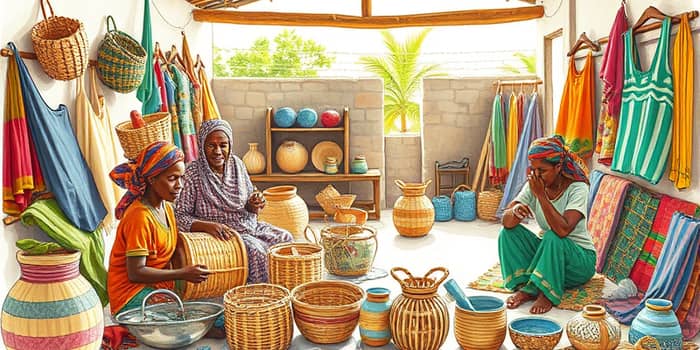
Rural handicrafts stand at the intersection of cultural heritage and economic potential. For centuries, artisans in villages around the world have created intricate textiles, pottery, woodwork, and metal crafts that reflect local traditions and skills passed down through generations. However, while the global market for handmade goods is booming, many of these craftsmen still struggle to secure the funding needed to scale their operations and sustain their livelihoods. This article offers a comprehensive roadmap for empowering rural artisans through funding and ensuring that the vibrant tapestry of handicrafts continues to enrich communities and markets worldwide.
The Significance of Rural Handicrafts
Rural handicraft production not only preserves ancestral techniques but also injects vital off-farm income streams into remote communities. In India alone, handicrafts account for over 7% of GDP generated by the small-scale industries sector and employ more than six million artisans, predominantly women. Globally, the market value is projected to surpass USD 1,200 billion by 2025, highlighting its immense growth potential. Beyond economics, handicrafts serve as a medium for cultural expression, enabling artisans to tell stories of identity, tradition, and resilience.
Investing in these sectors delivers a dual impact: sustaining heritage while fostering development. When artisans receive adequate capital, they upgrade equipment, experiment with contemporary designs, and access new markets. This, in turn, builds resilience against economic shocks and reinforces the social fabric of rural societies.
Market Trends and Growth Projections
The handicraft market is on an upward trajectory, bolstered by consumer demand for eco-friendly and sustainable products. Rising awareness of environmental issues has led shoppers to seek items made from jute, bamboo, organic dyes, and recycled materials. The Asia-Pacific region commands the largest share, followed by North America and Europe. Forecasts indicate a global market worth USD 2,397.15 billion by 2032, reflecting a compound annual growth rate of over 10% in some analyses.
The chart below summarizes key market projections:
Funding Mechanisms for Artisans
Securing capital remains a major hurdle for rural craftsmen. Fortunately, a diverse funding landscape is emerging to bridge this gap. Government initiatives often lead the charge, offering grants, low-interest loans, and infrastructure support. In India, programs like the Ambedkar Hastshilp Vikas Yojana and Dastkar Sashaktikaran Yojana provide training, raw material assistance, and market linkage support. In the United States, federal arts funding reached USD 1.01 billion in 2023, bolstering local craft collectives and regional fairs.
Beyond public funds, alternative sources play an equally critical role in democratizing access to capital. These options include:
- Microfinance and self-help groups that extend working capital to women and marginalized artisans.
- NGOs and social enterprises funding technical training, design innovation, and cooperative development.
- International development funding agencies that prioritize women’s empowerment and cultural preservation.
- Corporate CSR investments aimed at community development in craft clusters.
- Crowdfunding platforms enabling artisans to pre-sell collections and fund expansion.
Overcoming Challenges in Fundraising
Several obstacles impede formal fundraising for rural handicrafts. Unstructured operations, limited financial literacy, and a lack of standardized quality control create barriers to lender confidence. High production costs, stemming from traditional manual techniques and small batch runs, erode profit margins. Additionally, dependence on middlemen often means artisans receive only a fraction of the final sale price, limiting their capacity to reinvest in tools and training.
To address these challenges, stakeholders must foster strong institutional frameworks and financial literacy at the grassroots level. Workshops on bookkeeping, quality certification processes, and cooperative governance can build artisan confidence and strengthen their negotiating position with investors. Establishing aggregate production centers and shared logistics services can reduce costs and streamline market entry.
Digital Transformation: A New Frontier
The rise of digital platforms has revolutionized how craftsmen access consumers. E-commerce sales are projected to grow from USD 5.5 trillion in 2022 to USD 7.4 trillion by 2025, opening unprecedented avenues for direct-to-consumer models. Artisans leveraging social media platforms and online marketplaces can capture higher margins, build brand identities, and gather valuable market feedback.
Key opportunities in the digital space include:
- Online storefronts on platforms like Etsy and regional e-commerce sites.
- Social media marketing through Instagram and Facebook Shops.
- Virtual craft fairs and live-streamed product demonstrations.
By embracing technology, artisans enhance their visibility, diversify revenue streams, and secure funding through pre-orders. Digital literacy programs and partnerships with tech accelerators can accelerate this transformation, ensuring that even remote villages reap the benefits of global connectivity.
Inspiring Success Stories
Real-world examples demonstrate the power of strategic funding in transforming lives:
Itsy Bitsy (India, 2024) expanded its rural footprint by acquiring local craft federations. This move enabled it to standardize quality, consolidate supply chains, and provide skill-building workshops to over 2,000 women artisans.
Crown Crafts Acquisition (USA, 2024) signaled a growing corporate interest in handmade products. By integrating traditional craftsmanship into a larger retail network, the company boosted artisan incomes and introduced sustainable materials to a new demographic of families.
Crowdfunding campaigns have also reshaped capital access. In Vietnam, a community-funded project raised USD 50,000 to build a shared weaving center, equipping dozens of families with modern looms and training. These stories underscore the multiplier effect of targeted investments for cultural preservation and economic empowerment.
The Path Forward: Strategies for Stakeholders
To catalyze further growth in rural handicrafts, stakeholders must collaborate on several fronts. Policymakers should streamline grant application processes and introduce tax incentives for private investors in craft clusters. Financial institutions can develop tailored loan products that recognize the cyclical nature of artisanal businesses.
Industry associations and NGOs must expand capacity-building programs, focusing on quality assurance and market intelligence. Partnerships with design institutes and e-commerce platforms can drive innovation in product development and storytelling. Finally, artisans themselves should be encouraged to form cooperatives or producer alliances, enhancing bargaining power and enabling collective branding initiatives.
Together, these efforts will unlock new markets, preserve cultural legacies, and create sustainable livelihoods for millions. By adopting a holistic approach—combining public policy, technological advancement, and community engagement—we can ensure that rural craftsmen not only survive but thrive in the global marketplace.
Empowering rural artisans through capital is more than an economic imperative; it is a moral and cultural mission. As we craft the future of handicrafts, let us commit to strategies that uplift communities, protect heritage, and spark innovation across the vibrant landscape of global crafts.
References
- https://www.thebusinessresearchcompany.com/market-insights/arts-and-crafts-market-overview-2025
- https://www.futuremarketinsights.com/reports/handicraft-market
- https://www.grandviewresearch.com/industry-analysis/handicrafts-market-report
- https://www.expertmarketresearch.com/reports/handicrafts-market
- https://www.fortunebusinessinsights.com/handicraft-market-108435
- https://market.us/report/handicrafts-product-market/
- https://www.businessresearchinsights.com/market-reports/handicrafts-market-100147
- https://www.cognitivemarketresearch.com/regional-analysis/north-america-handicrafts-market-report