Commodities trading opens a window into the world of raw materials that power industries, economies, and daily life. Investors and businesses alike navigate this dynamic landscape to manage risk, secure supplies, and seize growth opportunities.
What Are Commodities?
At its core, a commodity is a primary product that can be bought, sold, and exchanged. These goods are interchangeable with other goods of the same type and serve as the building blocks of global trade.
They are traded in large volumes across markets, ensuring liquidity and price discovery. From metals to grains, commodities form the backbone of many industries.
Categories of Raw Materials
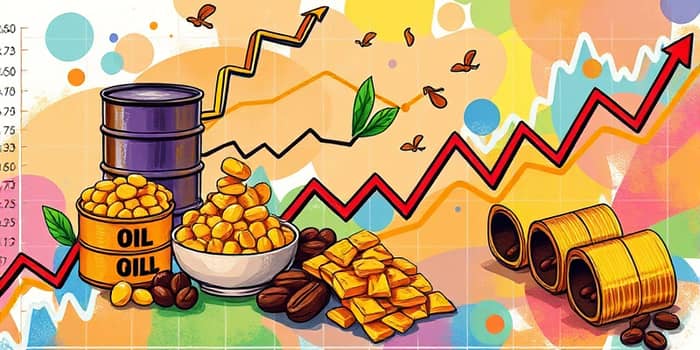
Commodities fall into two main groups: hard and soft. Hard commodities include metals and minerals, while soft commodities cover agricultural products and livestock.
Understanding these categories helps traders align strategies with market behavior.
How Trading Works
Commodities trade on spot markets and through futures platforms. The spot market involves immediate physical delivery based on current supply and demand.
Futures contracts offer standardized contracts for future delivery, enabling participants to speculate on price changes or hedge against them.
Major Commodity Exchanges
Global exchanges provide the infrastructure for transparent and efficient trading. Major venues in the United States include:
- Chicago Board of Trade (CBOT)
- New York Mercantile Exchange (NYMEX)
- ICE Futures U.S.
International hubs such as the London Metal Exchange (LME) and the Shanghai Futures Exchange (SHFE) also play pivotal roles.
Why Trade Commodities?
Commodities trading offers unique benefits. For investors, these markets can serve as a hedge against inflation and provide diversification when equity markets underperform.
At the same time, businesses engaged in manufacturing or agriculture rely on these markets to lock in prices and ensure stable supply chains.
Investment Opportunities and Risks
Various instruments allow exposure to commodity prices without needing to hold the physical goods:
- Futures Contracts: Enable both long and short positions for directional bets.
- Exchange-Traded Funds (ETFs): Provide diversified exposure without owning raw materials.
- Options: Offer flexibility to speculate on price movements with limited capital at risk.
Nonetheless, commodity prices are subject to unpredictable factors like weather events, geopolitical tensions, and shifting global demand. Effective risk management is essential when engaging in these markets.
Regulation and Oversight
To maintain market integrity and protect participants, regulatory bodies oversee trading activities. In the United States:
- The Commodity Futures Trading Commission (CFTC) ensures transparency and prevents market abuse.
- The National Futures Association (NFA) enforces compliance and ethical standards among brokers and traders.
Such robust regulatory oversight frameworks lend credibility to global commodities markets and foster investor confidence.
Challenges and Emerging Trends
Market volatility remains a constant hurdle. Rapid price swings can result from supply chain disruptions, extreme weather, or geopolitical events.
Technological innovations, however, are transforming the landscape. Digital trading platforms have fostered enhanced accessibility for individual traders and introduced algorithmic strategies to capitalize on dynamic shifts in supply chains.
Conclusion
Commodities trading stands at the intersection of physical markets and financial innovation. By understanding core principles—from spot trades to advanced derivatives—participants can navigate price risks and seize opportunities.
As the world evolves, raw materials will continue to drive industries and shape economic fortunes. Armed with knowledge, traders and businesses can harness the power of commodities to build resilience and pursue sustainable growth.
References
- https://www.investopedia.com/terms/c/commodity-market.asp
- https://www.cfainstitute.org/insights/professional-learning/refresher-readings/2025/introduction-commodities-commodity-derivatives
- https://smallexchange.com/commodity-trading-for-beginners
- https://www.investor.gov/introduction-investing/investing-basics/investment-products/commodities
- https://commodity-trading.org/purpose-scope/3-definition
- https://www.investopedia.com/investing/commodities-trading-overview/
- https://en.wikipedia.org/wiki/Commodity_market
- https://www.ig.com/en/commodities/what-are-commodities-how-do-you-trade-them