As we advance into 2025, global agribusiness stands at an inflection point. With investments projected to exceed $1.5 trillion, pioneers in this sector are redefining what it means to cultivate value beyond the confines of the traditional barn. Driven by shifting consumer preferences, climate imperatives, and rapid technological evolution, the future of farming demands diversification, innovation, and resilience.
Major Trends and Investment Opportunities
The modern agribusiness landscape is characterized by five transformative trends. Investors and producers who embrace these shifts can position themselves at the forefront of accelerating global agribusiness transformation.
- Diversification into specialty and climate-resilient crops
- Expansion of vertical farming and controlled environment agriculture
- Adoption of organic and regenerative practices
- Growth in alternative proteins
- Integration of advanced digital and precision technologies
For a concise overview, consider the following summary of key trends and their benefits:
Diversification into Specialty and Climate-Resilient Crops
Traditional staples like wheat and corn have historically dominated global agriculture. However, rising demand for health-focused foods and climate adaptation strategies is driving farmers to cultivate novel crops. Driven by diversification and technology adoption, markets for quinoa, hemp, pulses, medicinal plants, and heritage grains are booming.
These crops often command premium prices at retail, offering higher margins and better adaptation to droughts, floods, and temperature extremes. Countries in South America, Asia, and Africa are pioneering large-scale production, while smaller farms worldwide integrate rotational pulses to improve soil fertility and diversify income streams.
Harnessing Vertical Farming and Controlled Environment Agriculture (CEA)
Urbanization and resource scarcity have catalyzed the rise of vertical farming and CEA. By growing produce in climate-controlled towers or enclosed greenhouses, producers can achieve year-round cultivation with minimal land footprint and reduced water usage.
Investments in LED lighting, hydroponic systems, and automated climate controls are unlocking efficient resource utilization and climate resilience. These facilities supply fresh leafy greens, herbs, and even strawberries to metropolitan markets with dramatically shortened supply chains, reducing waste and delivering superior freshness.
Embracing Organic and Regenerative Agriculture
The organic market continues its double-digit growth, fueled by consumers seeking transparency and purity. Alongside this trend, regenerative agriculture practices—such as cover cropping, no-till farming, and rotational grazing—are gaining traction for their ability to restore soils, sequester carbon, and bolster biodiversity.
Certification programs and digital traceability platforms provide farmers with tools to demonstrate compliance, supporting stronger ESG integration. Producers who transition to these methods often see improved yield stability over time, underscoring the value of preserving long-term environmental health.
The Rise of Alternative Proteins and Agricultural Diversification
As ethical and environmental concerns shape consumer behavior, the alternative protein sector has emerged as a major growth area. Plant-based meat substitutes, insect farming, and lab-grown meat collectively address food security, animal welfare, and greenhouse gas emissions.
Venture capital and corporate investors have poured billions into startups like Aleph Farms, which produced the world’s first lab-grown steak in 2018 and expanded into collagen by 2024. With a $23 billion market in 2023, this category is projected to maintain robust growth, making it a strategic addition to any agribusiness portfolio.
Technology and Digital Transformation
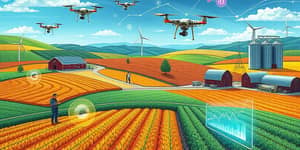
From field sensors to autonomous machinery, digital innovations are revolutionizing farm management. Artificial intelligence and machine learning models analyze multispectral imagery and soil moisture data to guide irrigation, fertilizer application, and crop protection.
Empowering smaller farms to compete, blockchain solutions ensure supply chain transparency, while digital twins—virtual replicas of farms—enable scenario testing and optimization. By 2025, over 60% of U.S. farms are expected to integrate some form of precision agriculture technology, setting new benchmarks for productivity and sustainability.
Key Challenges and Economic Context
Despite these optimistic trends, agribusinesses face headwinds from macroeconomic conditions and regulatory pressures. Inflation, consumer confidence fluctuations, and national debt burdens can dampen investment appetite and affect commodity prices.
- Inflation and volatile input costs
- Regulatory tightening on water and emissions
- Labor shortages amid rising wages
- Risk of global economic recession
Success in this environment depends on strategic risk management, navigating economic and climate pressures, and maintaining flexible business models that can pivot between crops, technologies, and value-added services.
Emerging Topics and Innovations
Beyond current trends, several nascent areas promise to reshape agriculture further:
- Bioengineering and CRISPR-based gene editing for climate resilience
- Carbon farming protocols that monetize soil sequestration
- Agricultural mapping and predictive analytics for yield optimization
- Digital twins for holistic farm simulations
Stakeholders who invest early in these innovations may capture outsized returns while contributing to global sustainability goals.
Building a Resilient Portfolio for the Future
Integrating the above strategies into a cohesive agribusiness portfolio requires deliberate planning and diversified risk exposure. Consider the following steps:
- Assess regional climate data to select resilient crop varieties
- Allocate capital to high-value CEA and vertical farming ventures
- Invest in regenerative practices and secure organic certifications
- Partner with alternative protein developers for joint R&D
- Deploy digital tools that enhance decision-making and traceability
By spreading investments across crops, technologies, and geographies, agribusiness leaders can optimize returns and reduce vulnerability to single-market shocks.
Conclusion
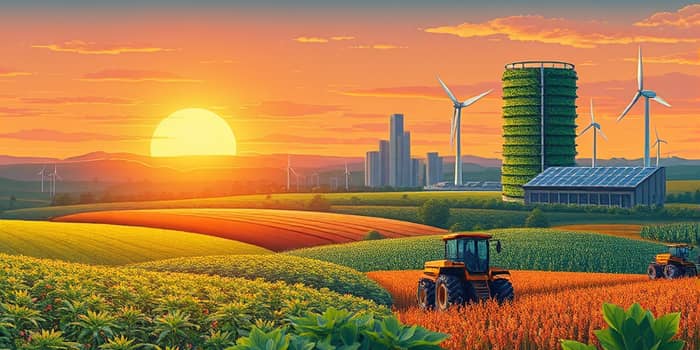
The agribusiness sector’s future extends far beyond the traditional barn. As global investment eclipses $1.5 trillion in 2025, stakeholders willing to embrace innovative agritech solutions and sustainable practices will set new industry standards.
Whether through specialty crops, vertical towers, organic fields, lab-grown proteins, or data-driven operations, the path forward is one of diversification, collaboration, and unwavering commitment to environmental stewardship. In doing so, agribusinesses will not only secure their own profitability but also nourish a healthier, more sustainable world.
References
- https://farmonaut.com/blogs/top-5-diversified-agriculture-investment-opportunities-2025
- https://www.farmsgear.com/blogs/news/2025-north-american-agriculture-trends-challenges-and-opportunities
- https://kadence.com/en-us/top-4-trends-set-to-disrupt-the-agriculture-industry-in-2025/
- https://farmonaut.com/usa/farming-in-america-2025-powerful-trends-shaping-agriculture
- https://www.startus-insights.com/innovators-guide/agriculture-trends/
- https://www.farmprogress.com/farm-business/us-agriculture-faces-split-fortunes-as-economic-challenges-persist-in-2025
- https://www.fas.scot/article/agribusiness-news-january-2025-global-trends/
- https://farmtogether.com/learn/blog/6-trends-in-food-and-agriculture-markets-for-2025