In 2025, the global agribusiness sector stands at a pivotal juncture. With investments projected to surpass $1.5 trillion, capital flows are transforming how we grow, process, and distribute food. This deep dive explores the forces driving agri-capital, highlights emerging trends, and provides practical guidance for investors, farmers, and policymakers committed to building a resilient food system.
As climate pressures mount and consumer expectations evolve, strategic funding is the linchpin of long-term food security. From smallholder cooperatives to multibillion-dollar ventures, every stakeholder can harness innovative financing to foster growth, sustainability, and shared prosperity.
The Growing Landscape of Agri-Capital
Global demand for food is surging alongside population growth, urbanization, and shifting diets. In the United States, net farm income is set to climb by $37.7 billion (26.4%) in 2025, while the livestock and poultry sector anticipates record purchases of $50.5 billion. These figures underscore the asset value of agriculture and its role as a hedge against market volatility.
Input costs are also reshaping investment strategies. Fertilizer expenses have fallen by 11.1% to $29.2 billion, pesticides by 6% to $18.1 billion, while seed costs are rebounding at 4.2% to $27.7 billion. Investors can leverage these dynamics by targeting regions and crops with favorable cost structures and robust margin potential.
Top Opportunities and Strategic Approaches
To capitalize on agri-capital growth, stakeholders should employ diversified, data-driven strategies that balance risk and reward. Key approaches include:
- Blending traditional farming with AgTech and alternative proteins for higher returns and resilience.
- Conducting thorough market and climate risk analysis to target resilient crops.
- Engaging local communities and stakeholders to ensure sustainable land stewardship initiatives.
- Integrating supply chains from production to processing to optimize quality and margins.
- Leveraging regional subsidies, grants, and green incentives for regenerative agriculture practices for resilience.
Emerging Trends Reshaping Investments
Several powerful trends are redefining agri-capital deployment in 2025. Mainstream adoption of regenerative agriculture practices for resilience—including no-till, cover cropping, and integrated pest management—boosts soil health and long-term yields.
Waste-to-value initiatives convert crop residues into biofuels, bioplastics, and bioenergy, ushering in a circular bioeconomy and waste-to-value models that reduce environmental impact and create new revenue streams. Meanwhile, digital marketplaces connect producers directly with consumers, improving transparency and pricing power.
Environmental, Social, and Governance (ESG) integration is now central to major funding rounds. Green bonds and impact investing emphasize traceability and carbon tracking, ensuring that capital aligns with regulatory mandates and consumer expectations for responsible sourcing.
A Data-Driven Comparison
Technology and Innovation Frontiers
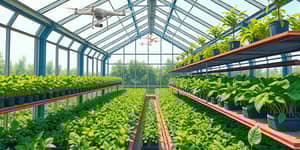
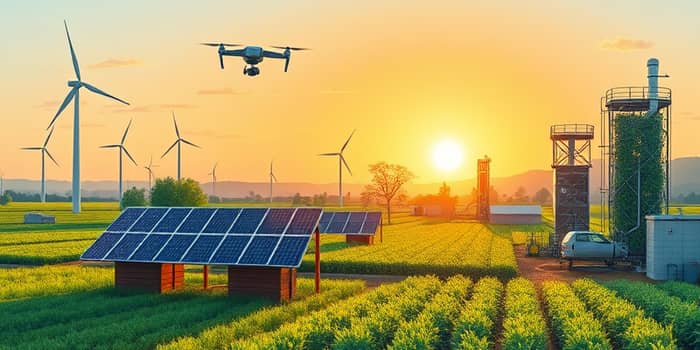
Artificial intelligence is revolutionizing farm management. Real-time crop monitoring via drones and IoT sensors, combined with predictive analytics, empowers farmers to reduce waste and increase yields. Satellite imagery paired with machine learning algorithms provides precise insights into soil moisture, nutrient status, and pest risk.
Biotechnology breakthroughs are delivering drought-resistant seed varieties and biological pest controls that minimize chemical inputs. Innovations in remote sensing and carbon utilization—such as enhanced weathering and biochar—support robust carbon sequestration strategies and compliance with emerging carbon markets.
More than 60% of venture capital funds are directed toward sustainability-focused and tech-driven startups, a testament to investor confidence in solutions that enhance productivity while safeguarding natural resources. Farm management platforms now offer APIs that integrate real-time weather, soil, and market data to drive smart decisions.
Balancing Risk and Reward
Climate risk and market volatility necessitate a careful balance of opportunistic growth and risk mitigation. Precision agriculture tools and data analytics reduce uncertainty, enabling targeted investments in regions and crop types with the greatest resilience.
Government incentives—including carbon markets, green bonds, and sustainable finance regulations—provide preferential funding and ESG incentives that lower capital costs for eco-friendly land development. Farmland remains a low-correlation asset, attractive to institutional investors seeking portfolio diversification.
However, some growers employ wait-and-see strategies in major markets, deferring non-essential investments amid commodity price fluctuations. Agile funding models, such as revenue-based financing and blended public-private instruments, can bridge financing gaps and maintain growth momentum.
The Human Dimension: Communities and Consumers
Consumer demand for regeneratively farmed and sustainably sourced products is transforming value chains. Brands that emphasize transparency and traceability command price premiums and build lasting loyalty.
Social responsibility and community engagement are no longer optional; they drive market differentiation. Collaborative platforms facilitate knowledge sharing among smallholder farmers, enabling inclusive growth and equitable access to capital. Mobile-based finance solutions and social impact bonds are unlocking new opportunities for underserved producers.
By embedding local stakeholders in decision-making, investors strengthen social licenses and foster rural development, ensuring that capital generates both financial returns and positive social outcomes.
Charting the Path Forward
To maximize impact in agri-capital, stakeholders should adopt coordinated, action-oriented strategies:
- Combine public incentives with private capital to fund regenerative and precision agriculture at scale.
- Deploy digital platforms that enhance traceability, reduce inefficiencies, and open direct-to-consumer channels.
- Support certification schemes and carbon markets to monetize ecosystem services and drive sustainable practices.
- Forge partnerships across the supply chain, uniting technology developers, producers, and distributors.
- Invest in capacity building and community-led initiatives to secure widespread adoption of best practices.
By aligning capital flows with ecological stewardship and social equity, the agri-capital ecosystem can meet growing food demands while protecting the planet.
The future of food depends on our ability to innovate, collaborate, and invest with purpose. Together, investors, farmers, and policymakers can transform funding into nourishment, catalyze breakthroughs, and build a food system that thrives for generations to come.
References
- https://farmonaut.com/blogs/top-5-diversified-agriculture-investment-opportunities-2025
- https://farmonaut.com/blogs/agriculture-real-estate-2025-trends-in-farming-land
- https://farmonaut.com/blogs/venture-capital-trends-in-agriculture-tech-funds-2025
- https://www.icl-group.com/blog/4-key-agrotech-trends-2025/
- https://www.mclaughlinpc.com/blogs/farming-trends-to-watch-in-2025
- http://www.ers.usda.gov/topics/farm-economy/farm-sector-income-finances/farm-sector-income-forecast
- https://www.agribusinessglobal.com/markets/10-key-trends-to-watch-in-global-agribusiness-in-2025/
- https://www.dllgroup.com/en/blogs/blogsoverview/2025-trends-innovations-and-challenges-in-agriculture-and-food-systems